in <b>/var/www/vhosts/eppleycustomfacialimplants.rosemontmediaweb.com/httpdocs/wp-content/themes/Skullreshaping/inc/home-slider.php</b> on line <b>47</b><br />
https://eppleycustomfacialimplants.rosemontmediaweb.com/wp-content/uploads/2021/07/Eppley_Custom_Facial_Implants_Logo.png)
MIDFACE CUSTOM IMPLANTS
Custom Cheek and Infraorbital-Malar (IOM) Implants
Cheek asymmetries, inadequate primary cheek implant results and infraorbital rim deficiencies create the main reasons for the fabrication of custom cheek implants. Custom cheek implants come in two basic styles, 1) implants that cover the cheek and zygomatic arch areas (which are placed intraorally) and 2) infraorbital-malar Implant designs that encompass the infraorbital rim and turn the corner to extend out into the zygomatic arch. (which are usually placed through a lower eyelid incision) Both of these custom cheek implant styles exist because they cover and augment more bony surface areas than standard cheek or any other type of midface implant. Many think that a custom cheek implant design means an implant that is bigger or has more projection, (and this is occasionally the case) But a custom cheek implant approach usually means an extended surface area coverage of the zygomatic-orbital bones that creates a unique augmentation effect not obtainable with performed cheek implant styles.
Style 1 custom cheek implants is most commonly done when the patient has had an unsatisfactory result using standard cheek implant styles. The most problem with standard cheek implants is that they create an anterior full ness or apple cheek effect. While this may be fine for some women it almost never is for a male. Many patients today seek a more contemporary cheek augmentation effect that has the augmentation going more posterior back along the zygomatic arch. This follows the natural shape of the zygomatic bone as it covers most of the zygomatic arch. This is often referred to as the ‘high cheekbone look’ but anatomically is a more complete coverage of the zygomatic bone that follows its more horizontal course.
For patients with infraorbital rim recession/deficiency, there are no standard implants that can even be modified to use for augmentation. The limited bone surface of the orbital rim area requires an implant that is specifically made for it to sit properly along its edges and feather into the medial and lateral orbital rim areas without palpable or visible step-offs. But almost all cases of infraorbital rim recessions and negative orbital vectors have malar deficiency as well. Thus the style 2 custom cheek implant is an infraorbital rim implant that almost always has a malar extension. (custom infraorbital-malar implant also known as a custom IOM implant) How much infraorbital rim augmentation is done and how far back along the cheek/arch it extends and its various thicknesses along the way will differ based on each patient’s aesthetic needs.
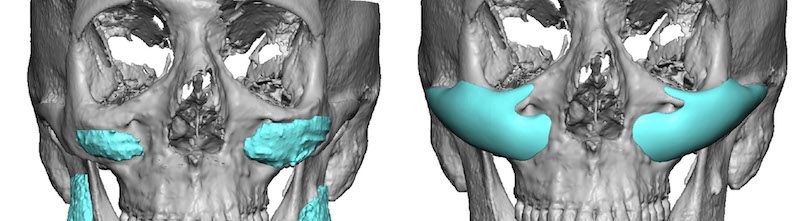
Custom style 1 cheek implant design that covers the entire zygomatic bone and arch that far exceeds what the prior cheek implants could achieve.
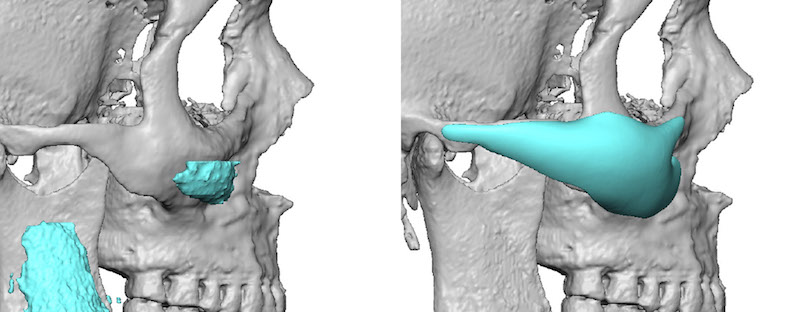
The key in achieving a high cheekbone look is taking the implant design back along the zygomatic arch, past the zygomatic arch suture line to the zygomatic process of the temporal bone.
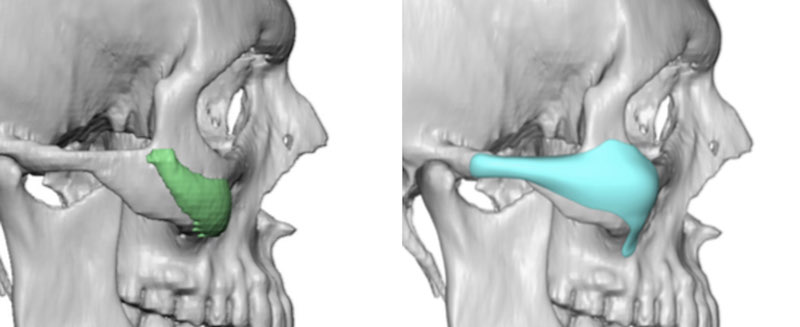
Standard cheek implants, in this case a submalar style, keeps their effect to the anterior cheek region. A style 1 custom cheek implant relocates the cheek fullness to a higher level and further back along the zygomatic arch.

The top view is one of the best way to shows the effects of arch augmentation achievable by a custom cheek implant design which is completely unachievable in any standard cheek implant style.
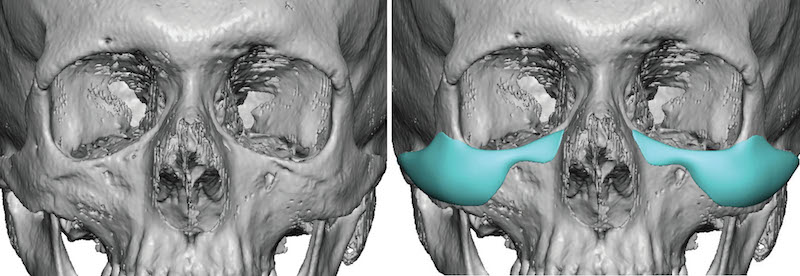
Style 2 custom cheek implants have an infraorbital component to them that wrap around the main cheekbone area and extend out into the zygomatic arch to build out the upper horizontal line of the midface.
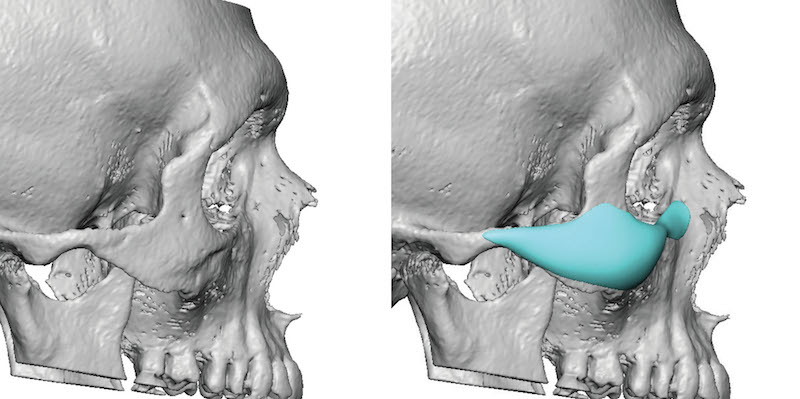
Wrapping around the upper midface from the nasal bone out onto the end of the zygomatic arch is the custom infraorbital-malar cheek implant style that offers improvement in undereye hollows as well as a high cheekbone augmentation effect.

A custom infraorbital-malar implant design with a maxillary extension for increased anterior cheek fullness as well.

A Custom Infraorbital-malar implant with maxillary extension adds submalar/maxillary projection.
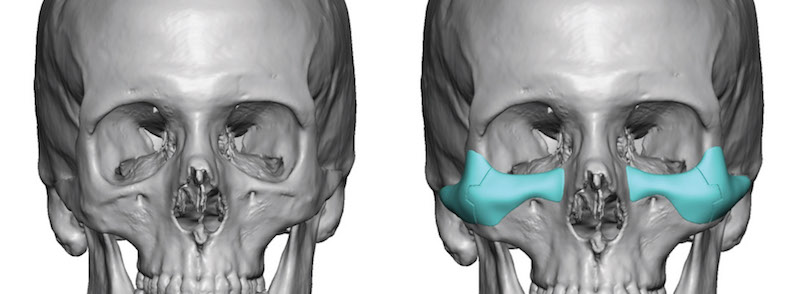
Larger custom infraorbital-malar implants, as defined by significant vertical infraorbital rim and anterior cheek augmentation, may require a split design to be placed through small lower eyelid incisions.

For deep under eye hollows and flat cheeks, which often go together, larger custom infraorbital-malar implant dimensions are needed. This is achieved by sadding the infra- and lateral orbital rims.

An effective strategy for the high cheekbone look is to keep the implant design high up along the cheekbone staying clear of the submalar bone area leaving it uncovered.
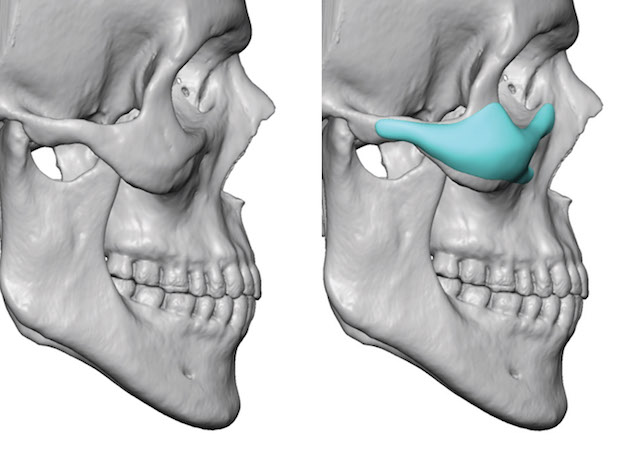
The high cheekbone effect in the under eye hollows patient creates a horizontal line of augmentation from the nasal bones out to the tail of the zygomatic arch.
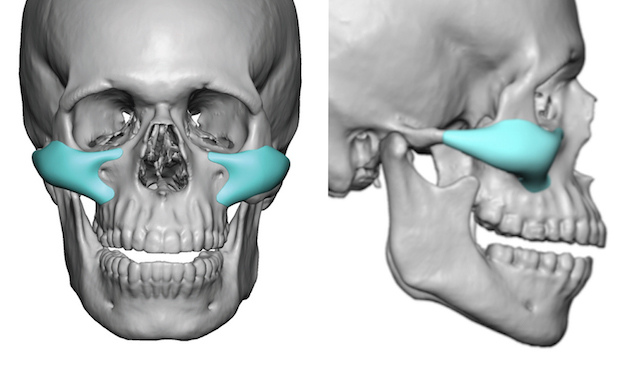
Style 1 custom cheek implants that can potentially be inserted intraorally if the infraorbital rim component is not extensive and the infraorbital rim saddle is minimal. They provide a high cheekbone look but with some anterior cheek projection as well. The maxillary extension provides a convenient registration method along the posterior maxillary buttress which can be removed after screw fixation is applied if it is not aesthetically needed.
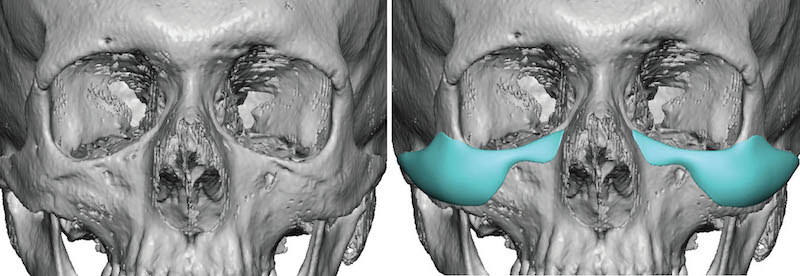
Custom style 2 infraorbital-malar implants for the high cheekbone look in the lean male face. implant surface area coverage is more important than implant projections in the thin face who seeks definition not mass volume augmentation.
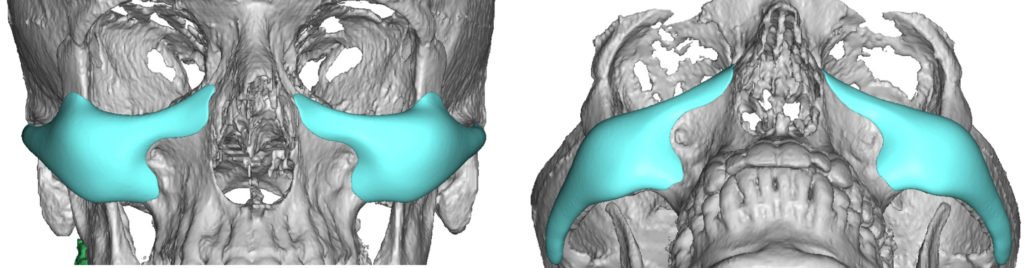
Custom infraorbital-malar implants with a maxillary extension for submalar augmentation as well.
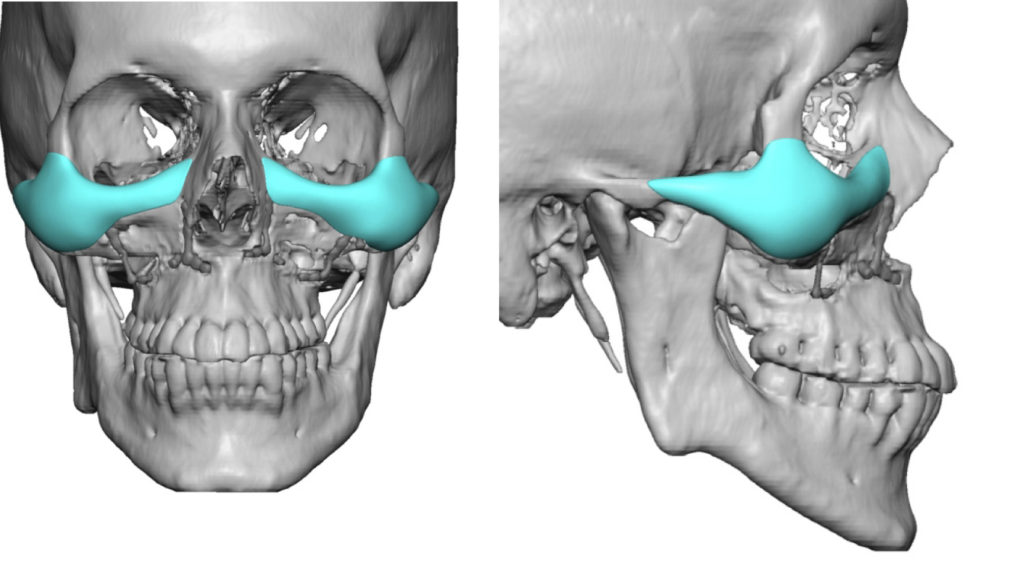
Custom infraorbital-malar implants to build out the upper midface that was left ‘behind’ by the LeFort I osteotomy done below it. This type of secondary augmentation is needed particularly after large Bimax advancements for obstructive sleep apnea.
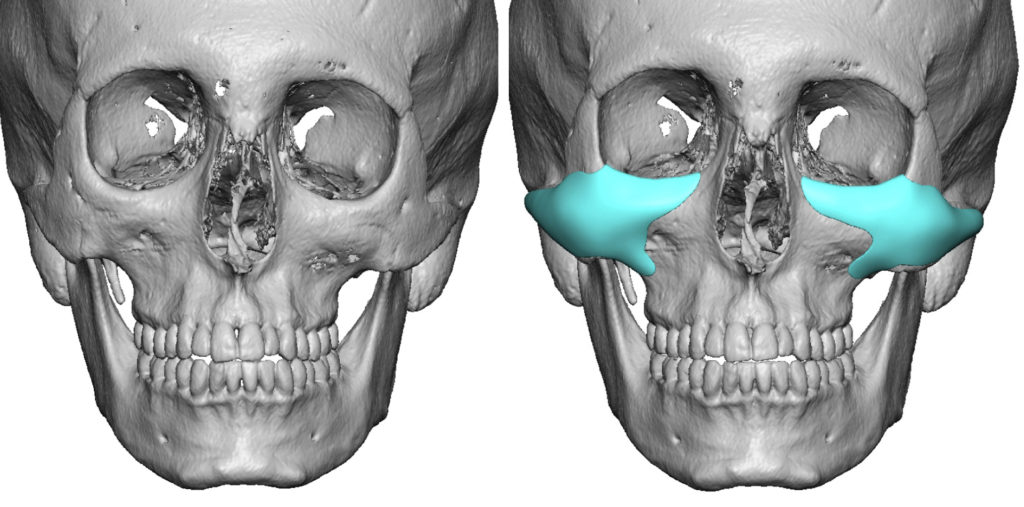
Custom infraorbital-malar implants for full cheek effect with blending into the infraorbital rims.

Custom infraorbital-malar implants with long zygomatic arch extension that requires a lower eyelid incisional placement.

It is a common aesthetic error to use standard cheek implants (green color) in many men. They create an anterior roundness to the midface that is more feminine than masculine in appearance. Many men want a high cheekbone look which anatomically means an extended horizontal augmentation from under the eye back along the zygomatic arch. (teal color)

The high cheekbone look is created by an implant design that runs parallel to the natural infraorbital-malar bone structure. This changes the location and line of augmentation to a high level than that of standard cheek implants.
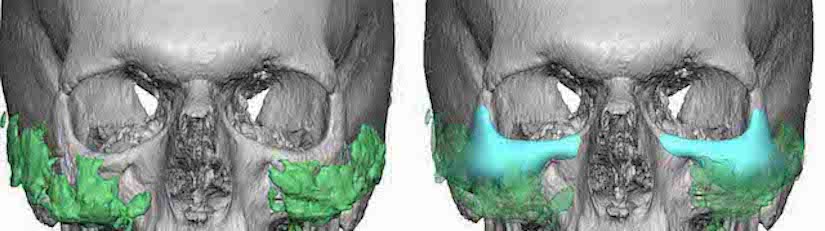
Custom cheek implants are often used after patients have either trialed injectable fillers to see if they like the effects or have tired of their need for repeated injections and expense. Injectable fillers do not have to be removed prior to custom cheek implant placements. The only injectable filler capable of being seen in a 3D CT scan is Radiesse because of its calcium hydroxylapatite composition.
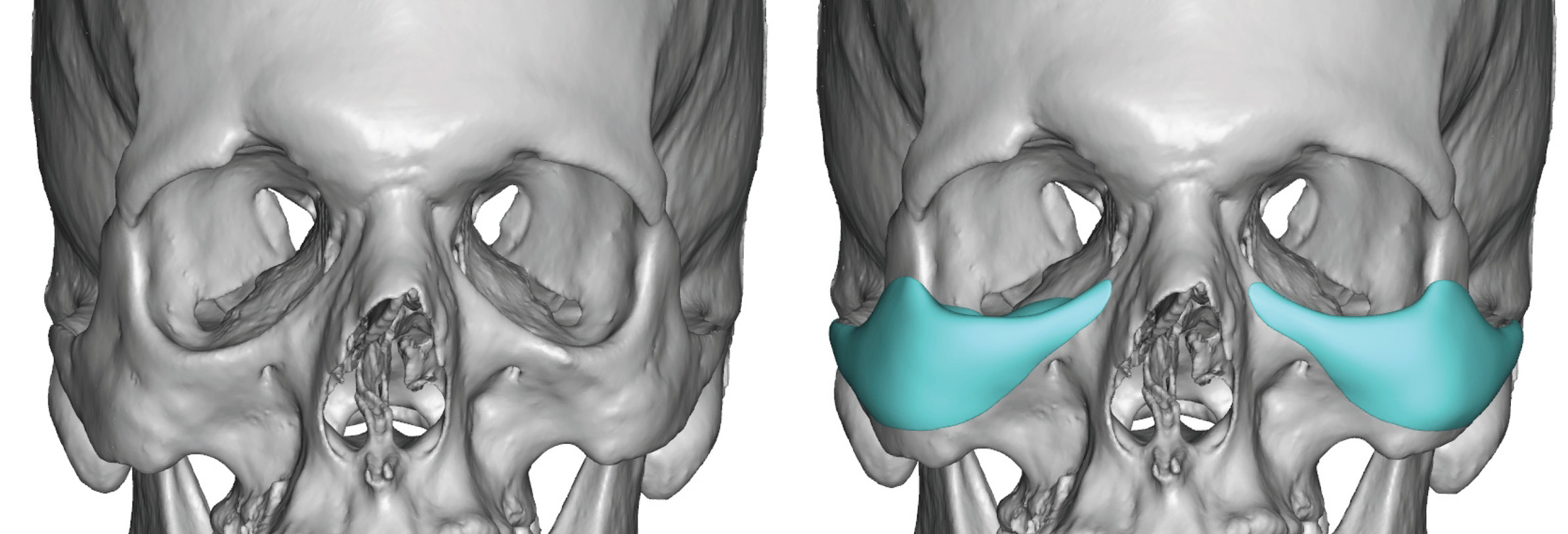
\In patients have saggy cheeks and droopy eyes the bone shape often appears similarly indicating a congenital developmental issue not a pure soft tissue only cause. Custom infraorbital-malar implants can correct this appearance by having a high implant location that stays horizontal along the infraorbital rim-high cheekbone level.
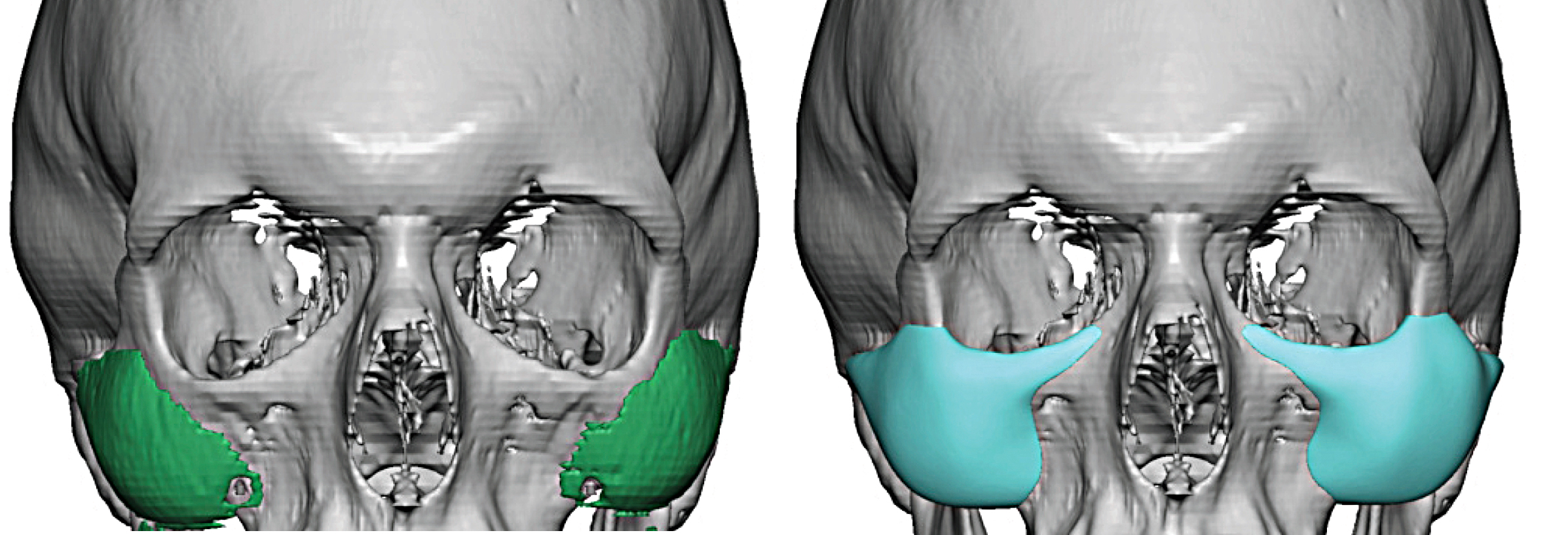
\Normally standard cheek implants in a male rarely create a favorable aesthetic outcome, creating an undesired ‘apple cheek’ fullness effect. But in this male they were very favorable due to his significant midface deficiency and negative orbital vector. But they did not add to his infraorbital rim deficiency (actually made it more apparent) and did not have volume high up on the cheekbone area. Custom infraorbital-malar implants were designed that retained what the current cheek implant effects created and then added where they were deficient. This created an unusual looking type of midface implant but a very effective aesthetic one.

The high cheekbone look does not come from any standard cheek implant. It is more reasdily achieve from an infraorbital-malar implant design that it provides a horizontal augmentation line from under the eye all the way along the zygomatic arch, avoiding the submalar area that all standard cheek implants augment.
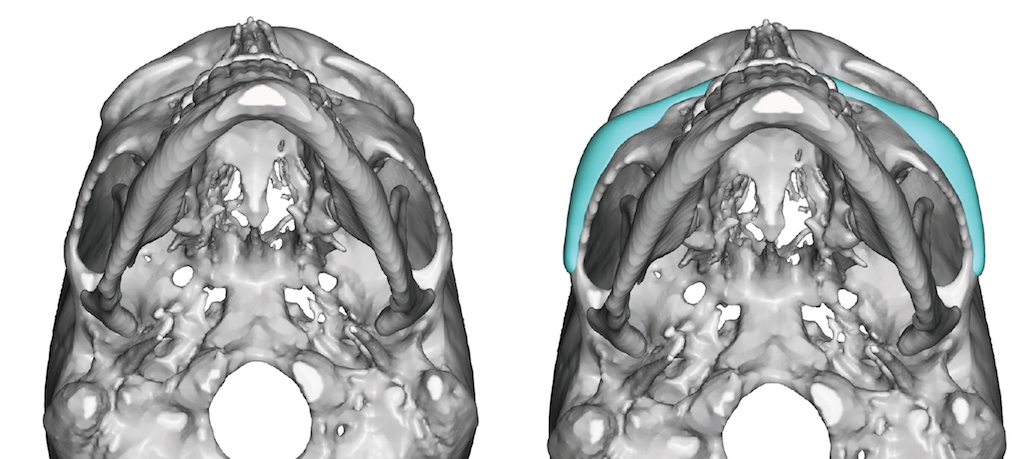
The submental view shows the long horizontal line of augmentation across the upper midface that a custom infraorbital-malar implant provides. (from the nasal bones out to the tail of the zygomatic arch)
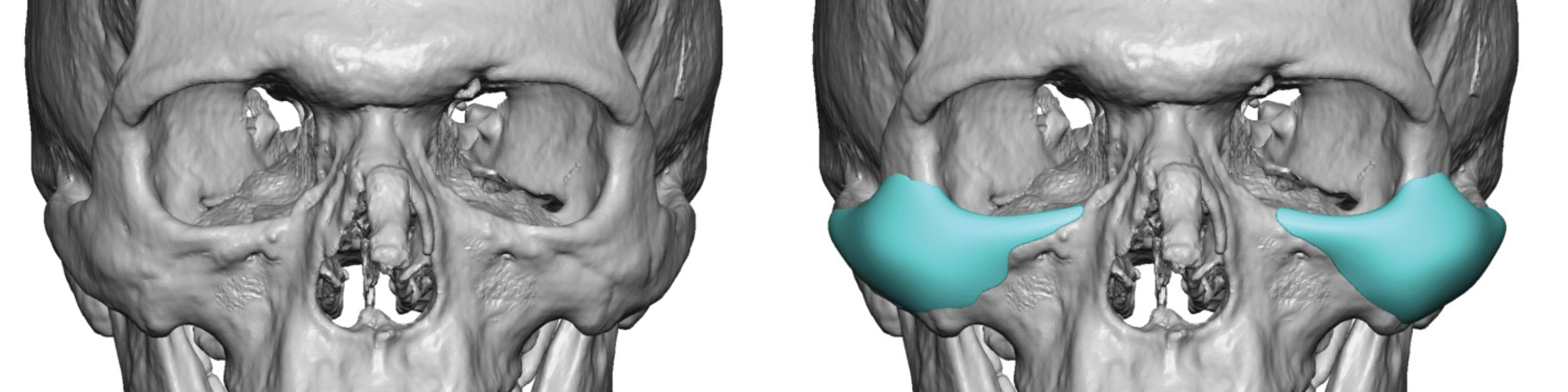
Even though smaller versions of custom infraorbital-malar implants appear like they can be easily placed through an intraoral approach, the risk of malposition are much higher than when going through a small lower eyelid incision.
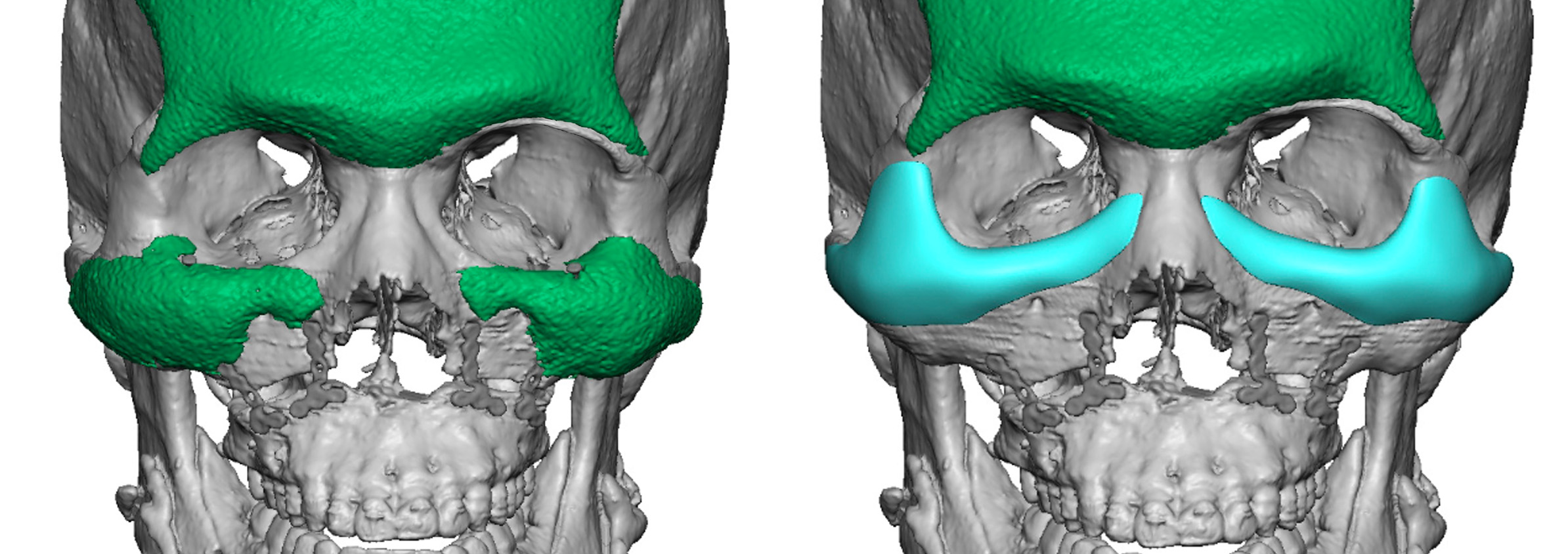
Despite the advantages of custom infraorbital-malar implants poor designs of them will still give an undesired midface look. Almost all men do not want an ‘apple cheek’ effect which rounded implant shapes that sit low will create. To create the more desired high cheekbone look the IOM implant design must sit much higher than one would think and cover a broad area along the infraorbital rims and out onto the zygomatic arches.
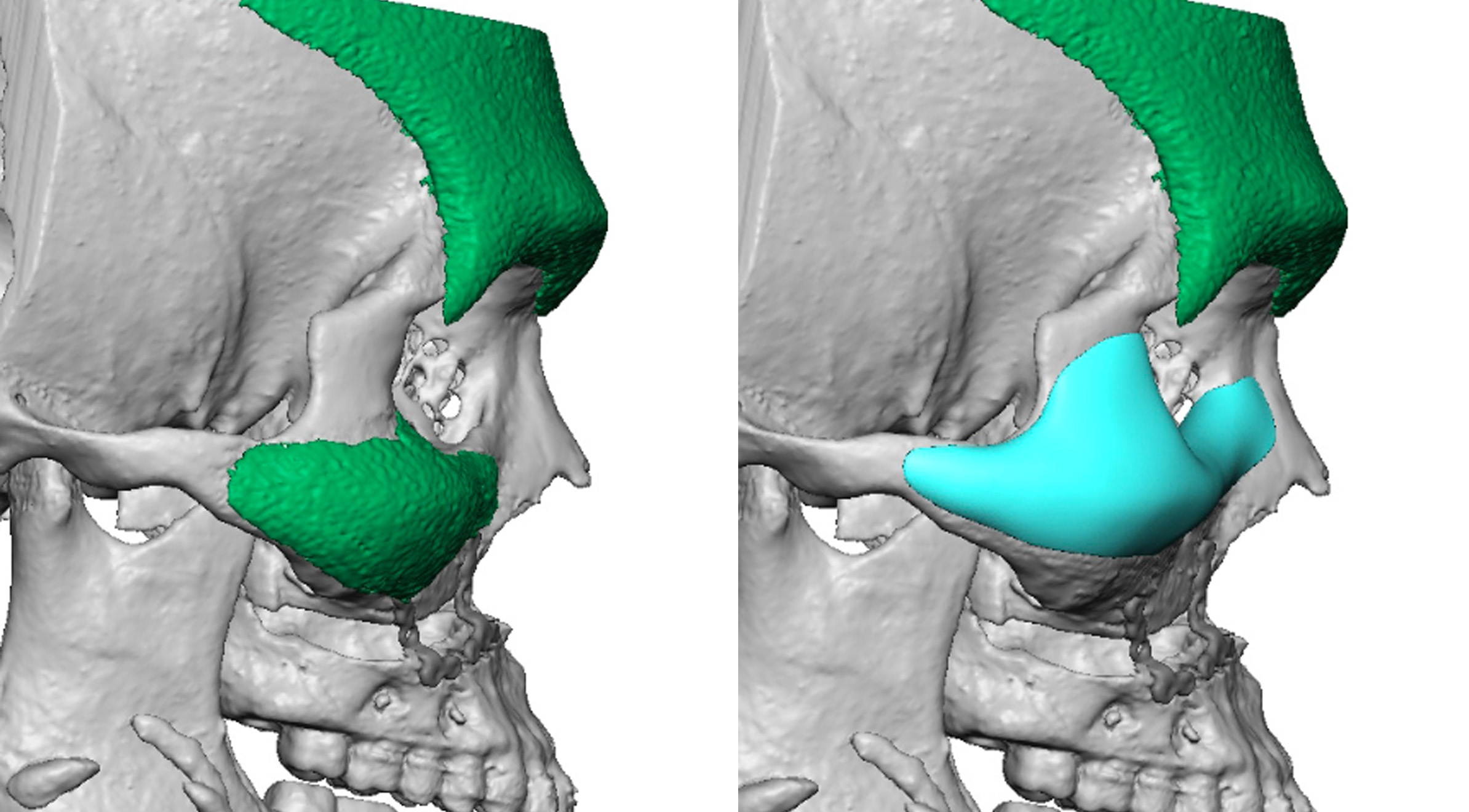
To create a high cheekbone effect the IOM implant design must be high up on the cheek bone, in alignment with the upper zygomatic arch, and saddle the infraorbital rim over to the nasal bones.
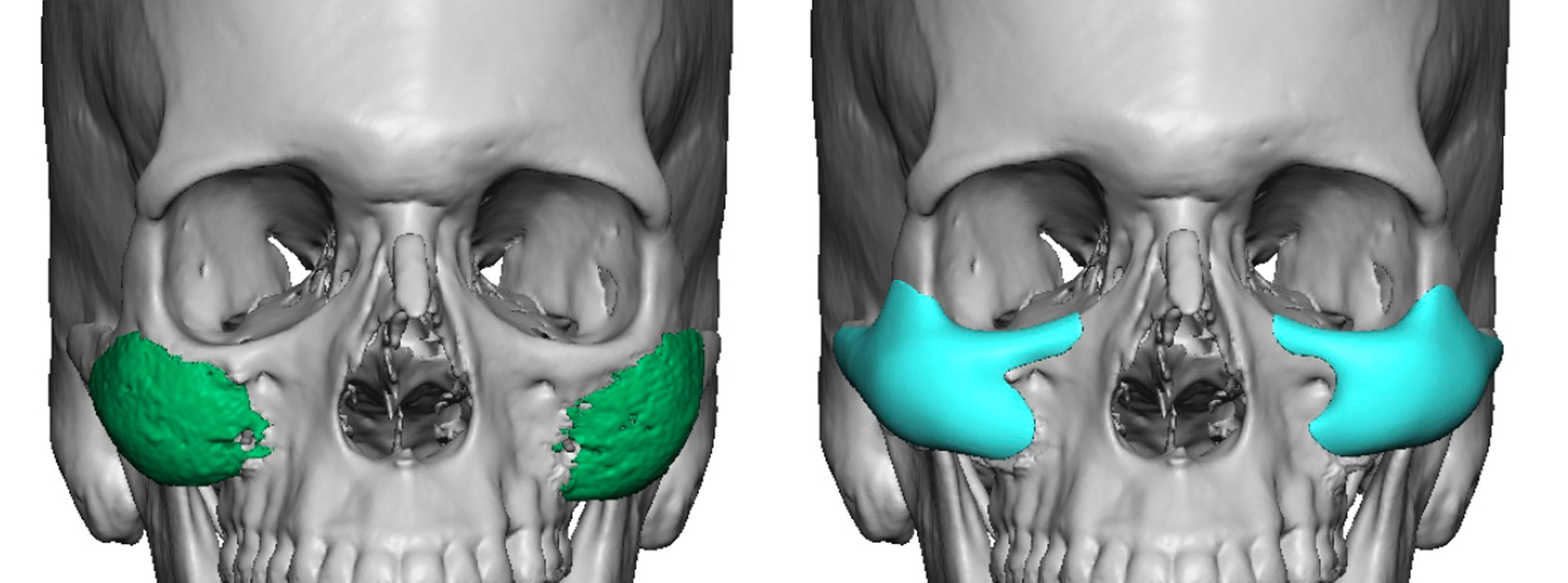
When a more complete midfacial underdevelopment occurs standard cheek implants will prove to be inadequate for a good augmentative correction. To treat the higher midface area a custom infraorbital-malar-maxillary implants provides the surface area coverage that is needed.
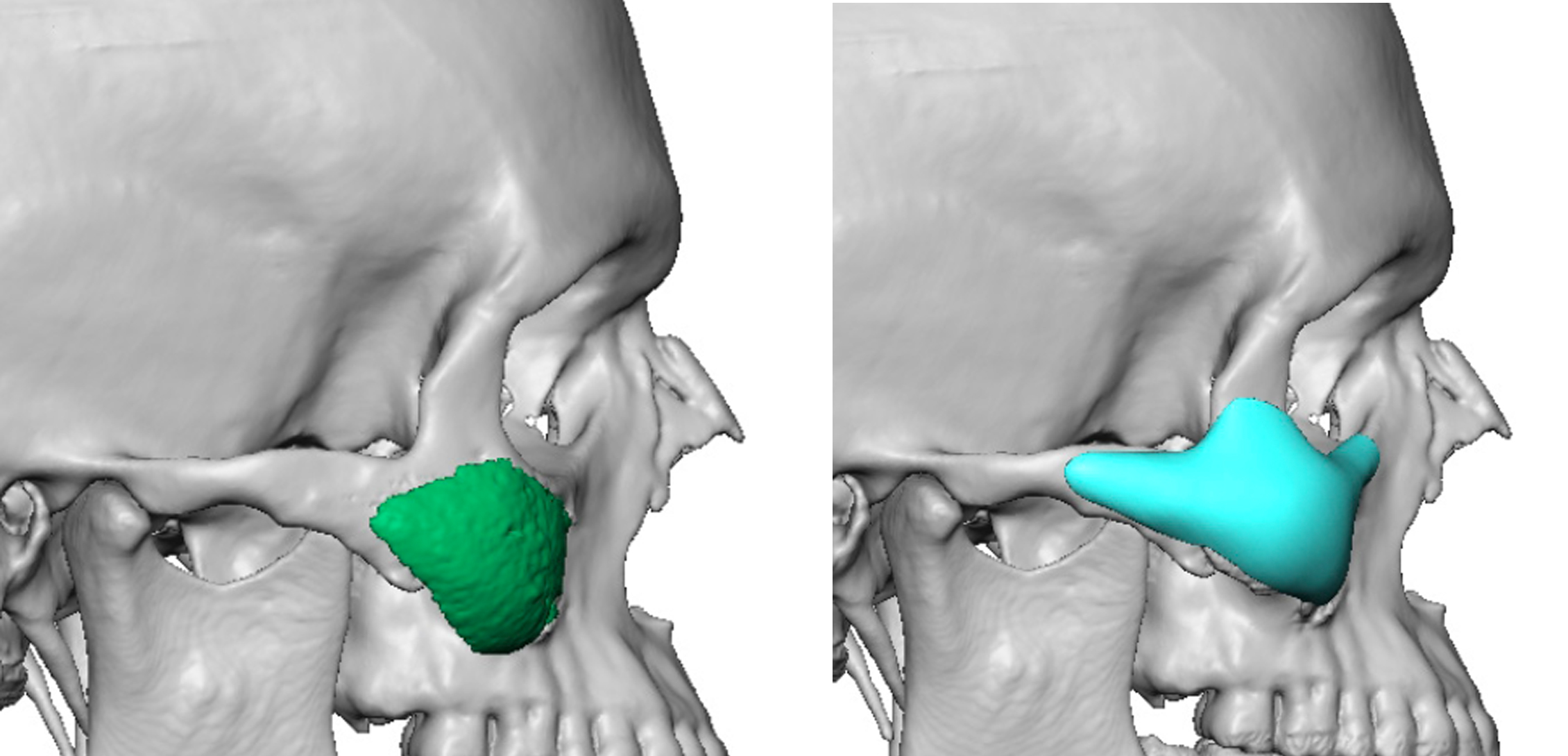
To effectively reach the higher levels of the midface (infraorbital rim and zygomatic arch a custom implant design is needed. The use of standard cheek implants, no matter how high they are positioned, do not provide adequate augmentation.
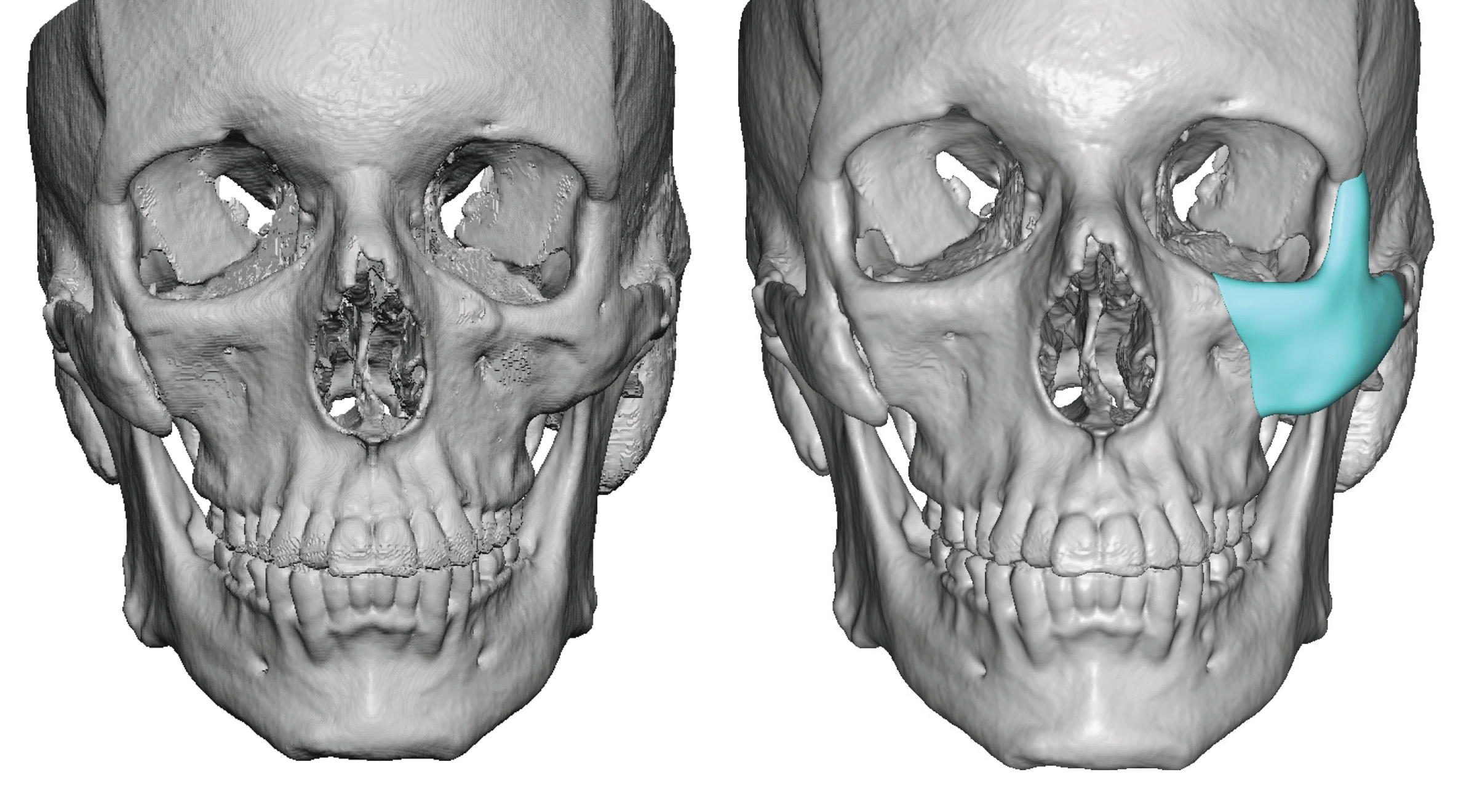
In attempting to treat cheek asymmetry caused by an old untreated ZMC fracture a cheekbone reduction was done on the opposite side. (never a good idea to try and make the normal match the abnormal) A more effective was done by the placement of a custom cheek implant to build back up the depressed ZMC cheek complex.
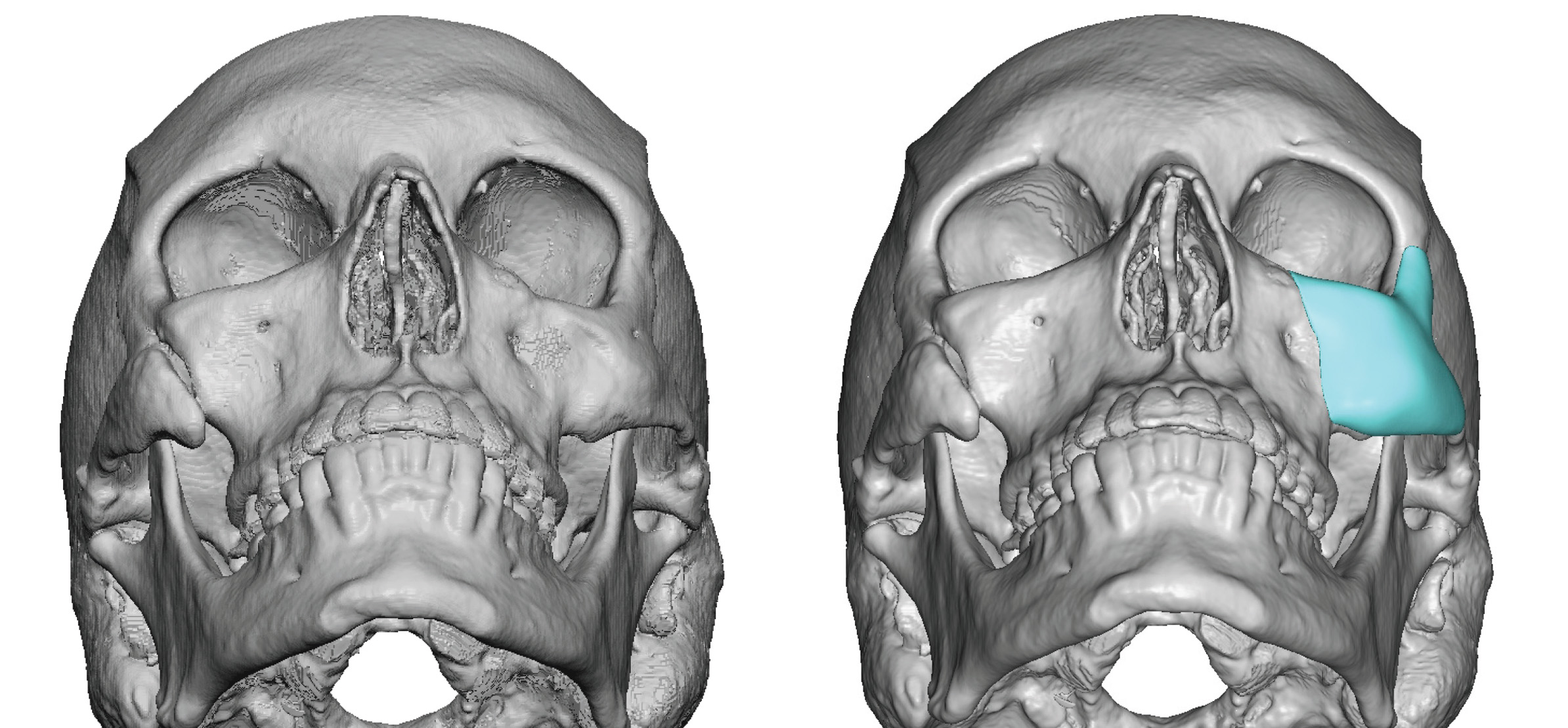
The custom ZMC fracture cheek implant builds back out the old depressed fracture using an onlay implant design.
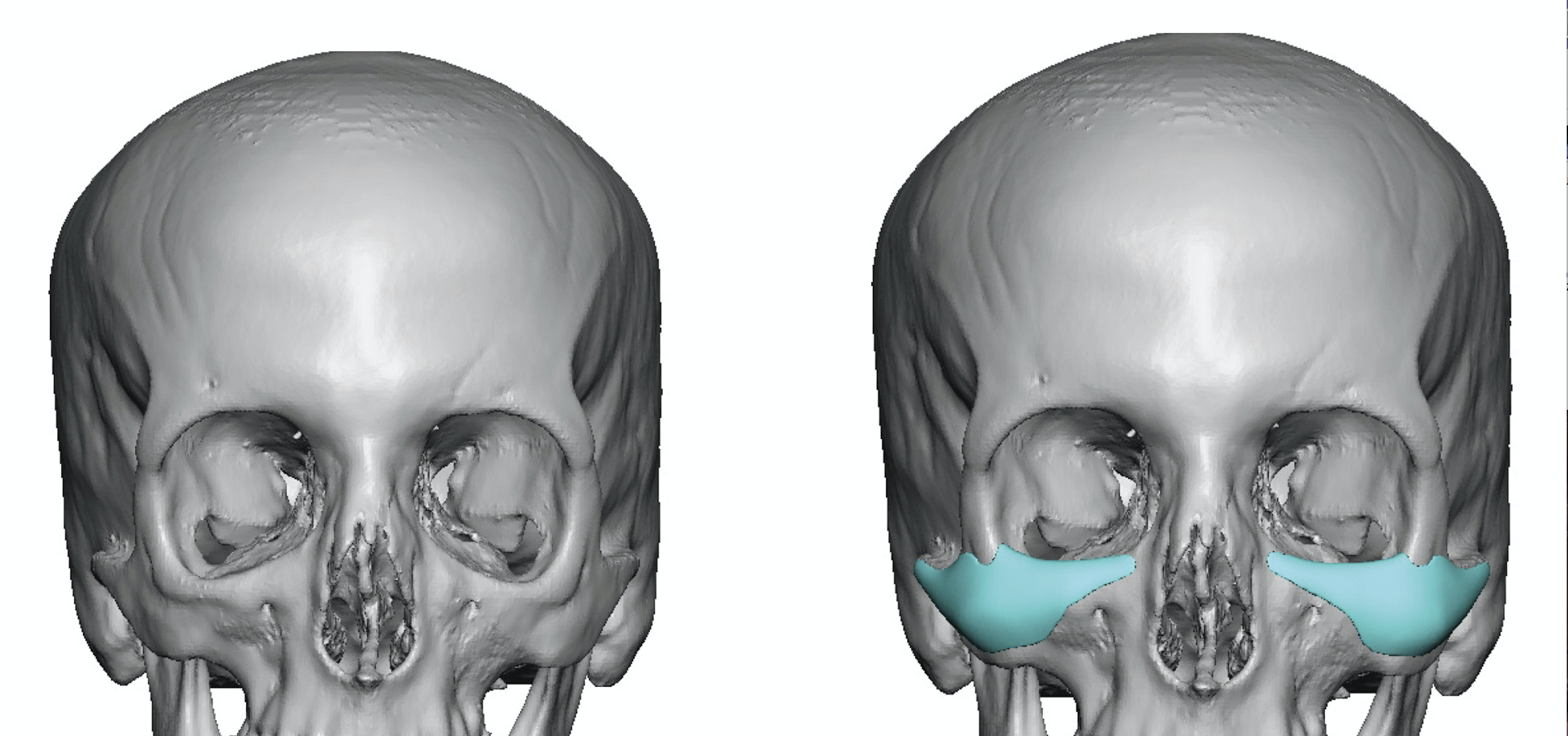
Deep undereye hollows usually represents a low infraorbital rim level particularly in its outer half. It can be seen in this female undereye hollow patient how the infraorbital rim dips down and the cheekbone is rotated inward. (they usually go together) Only a custom infraorbital-malar implant can raise the infraorbital rim (5mms in this case) as well as augment the cheek at the same time in unified and smooth augmentation effect.
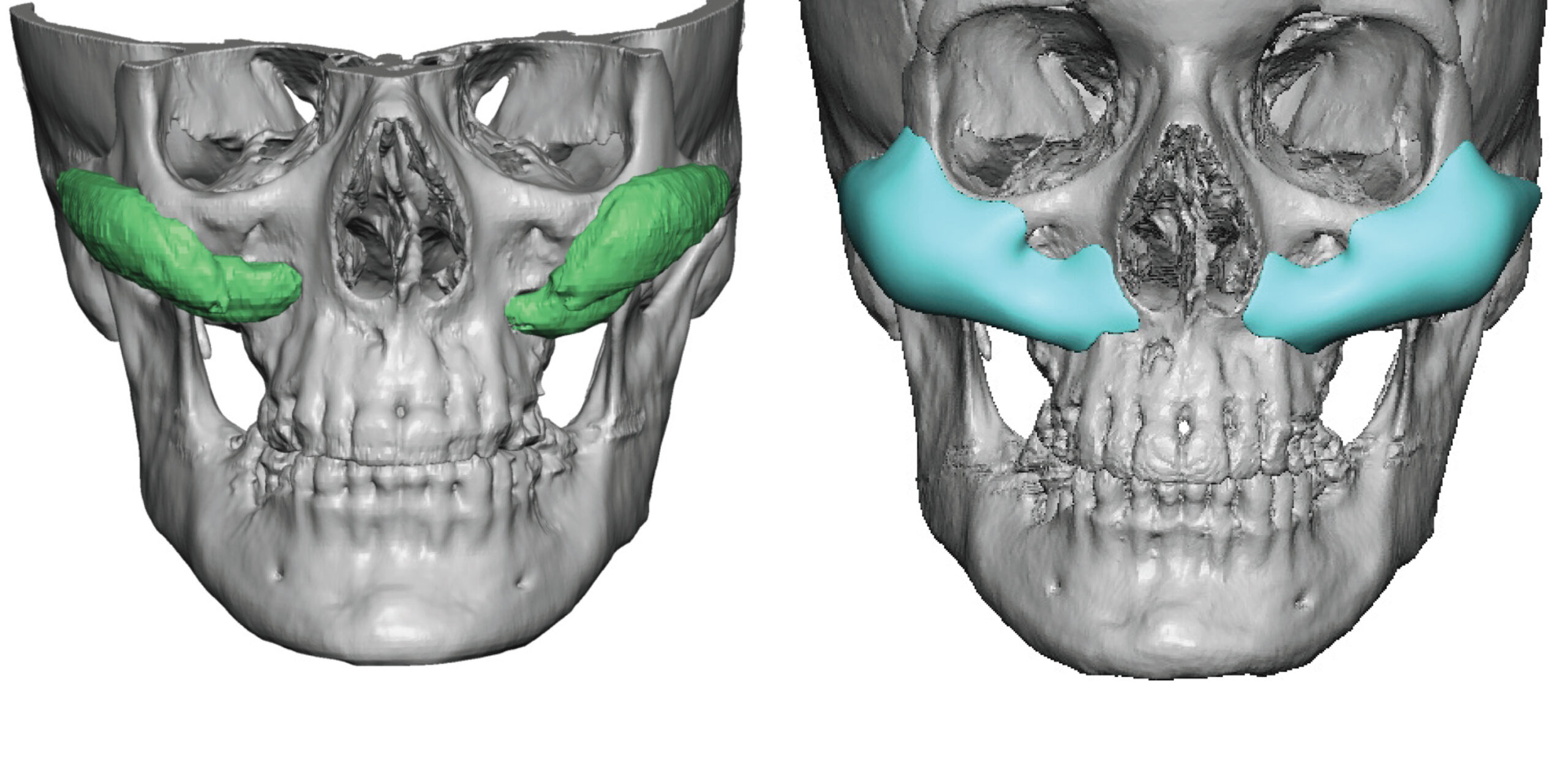
Older female with double stacked standard cheek implants placed twenty years ago now desired much larger cheek implant replacements for a cheeklifting effect. Extra Large (XL) custom cheek implants with 9mms of projection in the malar-submalar area with a maxillary extension to the paranasal region for an overall midface augmentation effect.
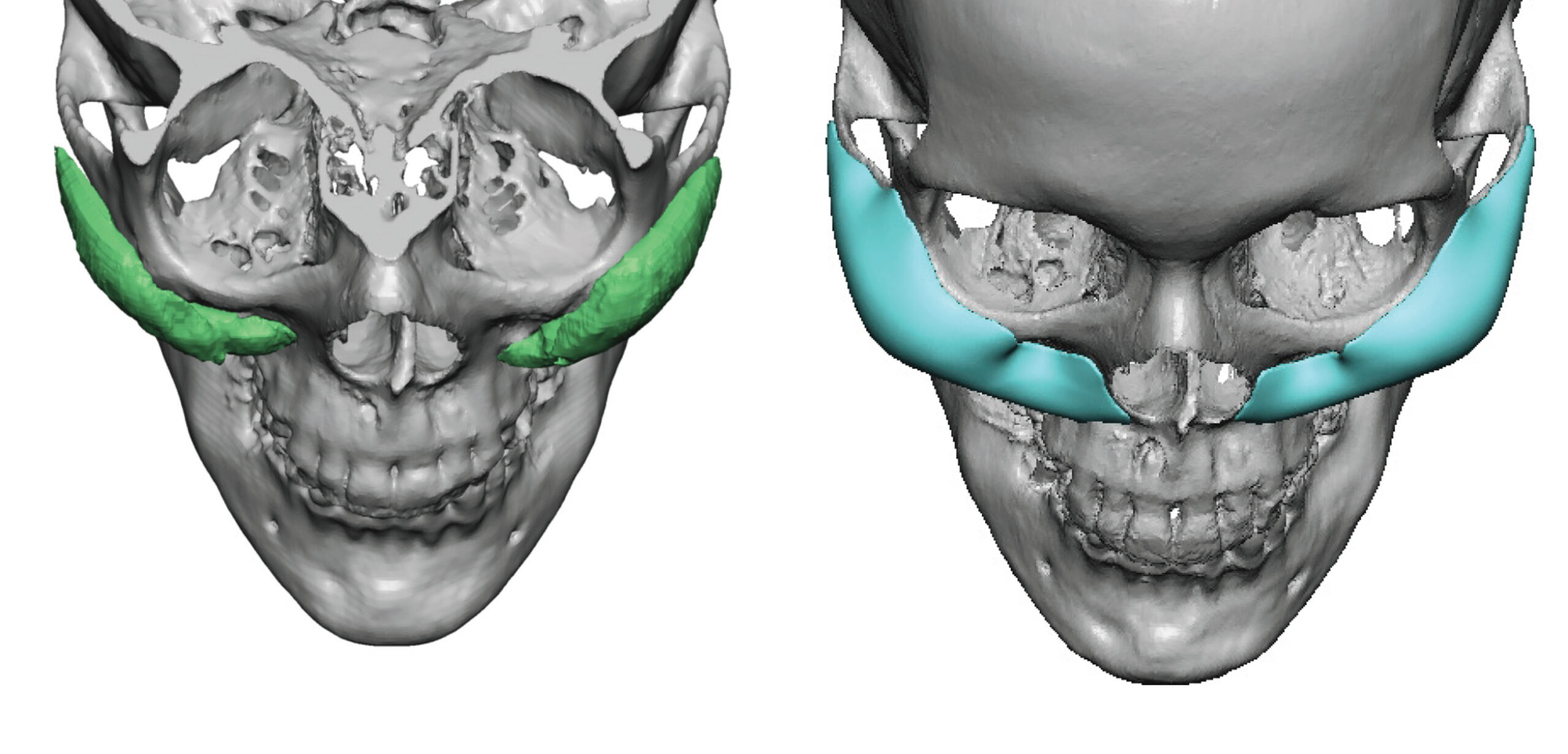
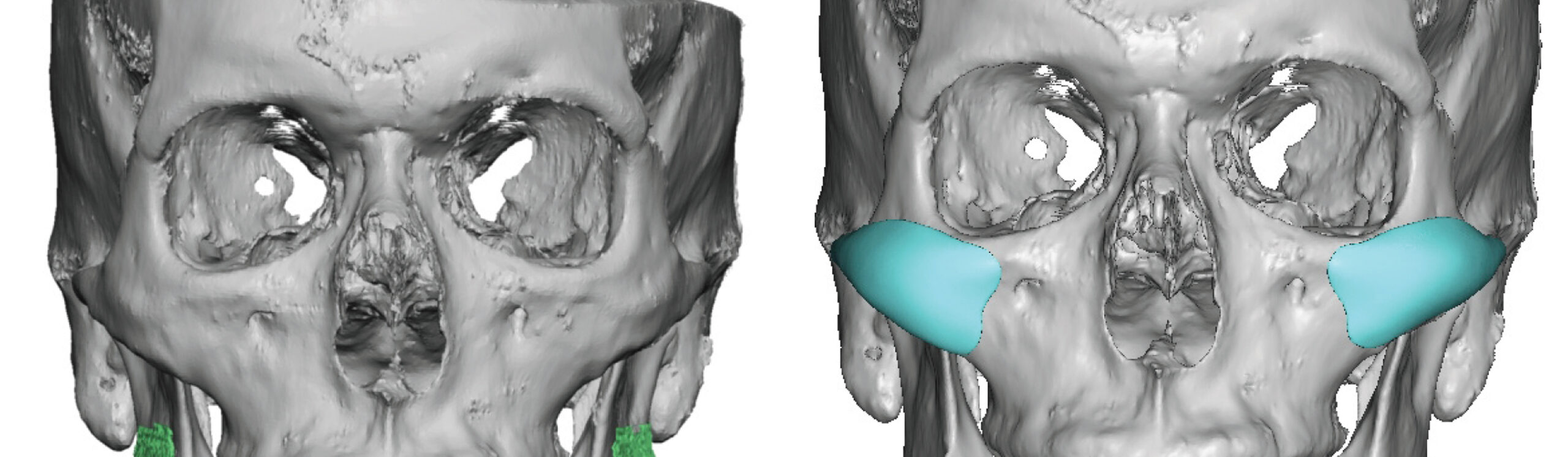
The high cheekbone look implant completely covers the zygomatic body and arch, augmenting pure cheek bone and no underlying soft tissue (like standard cheek implants do).
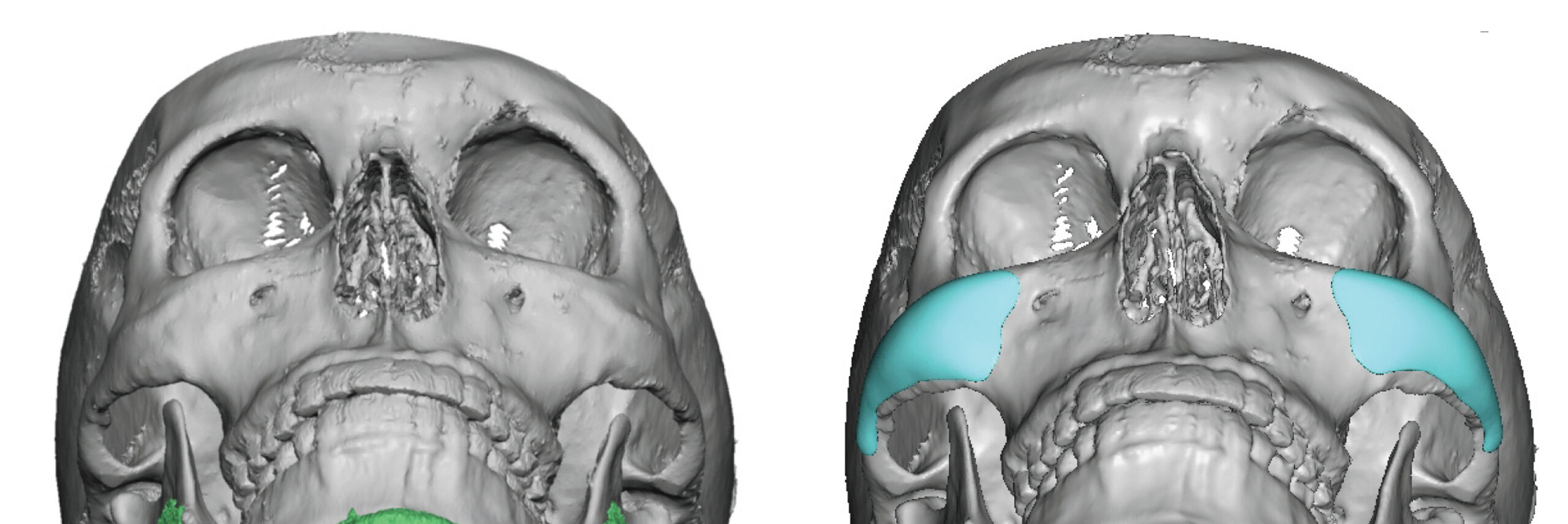
In the high cheekbone look implant design the submalar cheek area is avoided and the implant stays completely on the zygomatic bone.
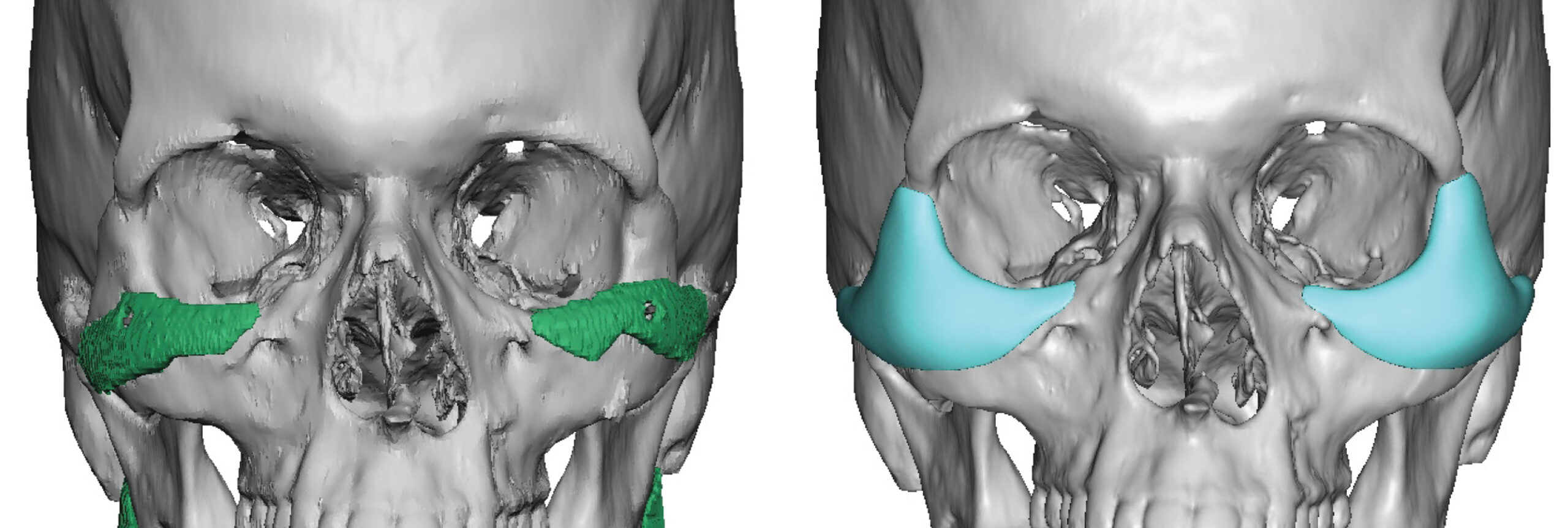
Standard tear trough implants provide a limited horizontal augmentation effect along the infraorbital rim. Custom infraorbital-malar implants provide augmentation of the ZMC skeletal unit and are often what some patients graduate to when tear trough implants are initially used.
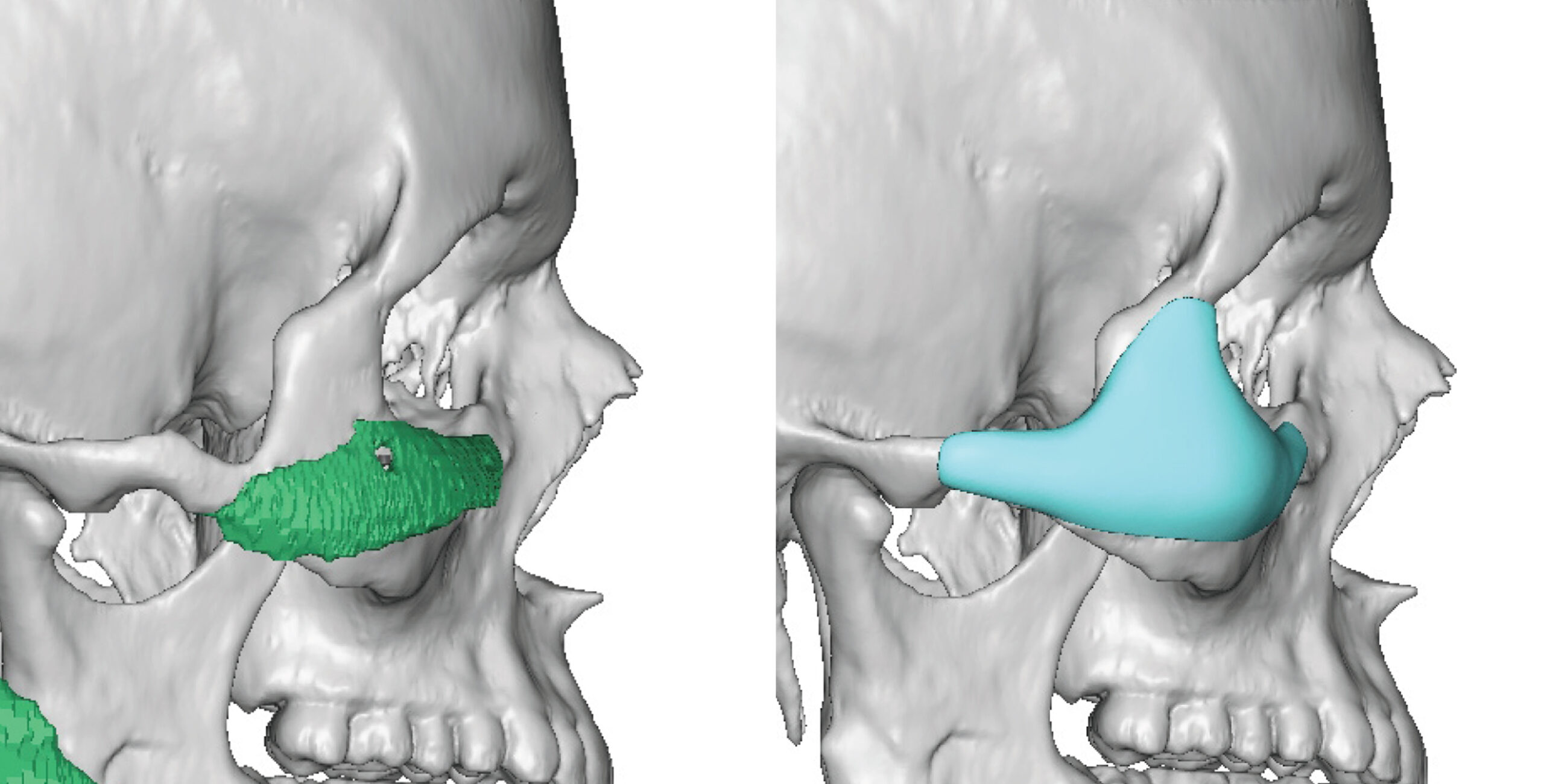
Custom infraorbital-malar implants augment the infra- and lateral orbital rims, cheekbone and the zygomatic arch for a skeletal unit augmentation effect as opposed to the spot augmentation effect of standard tear trough implants.
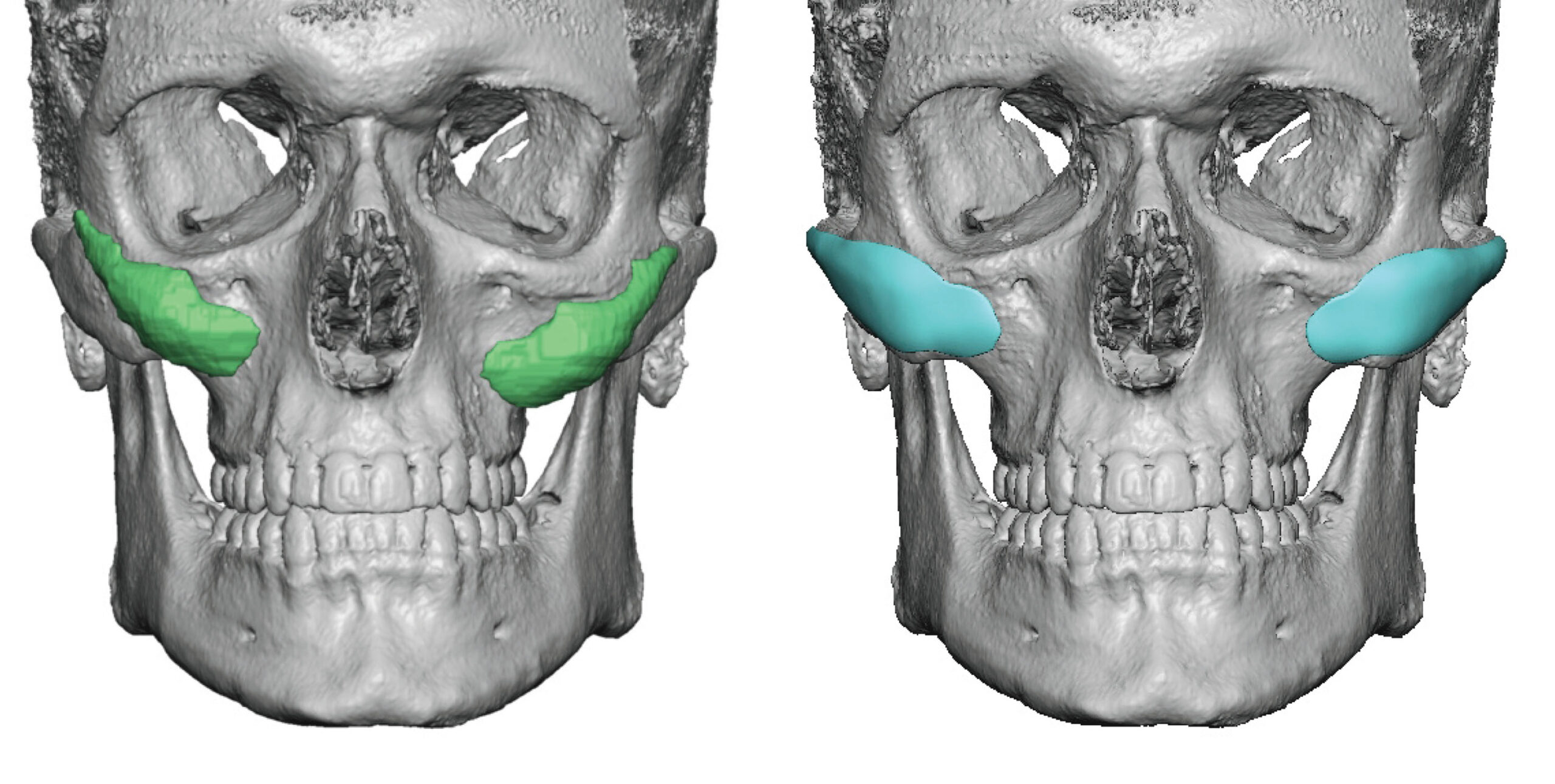
Standard submalar implants for a young male seeking cheek augmentation is rarely the correct implant choice. Such male patients seek a higher more bone-based level of augmentation than one over the maxilla which creates more of a lower rounded cheek look.
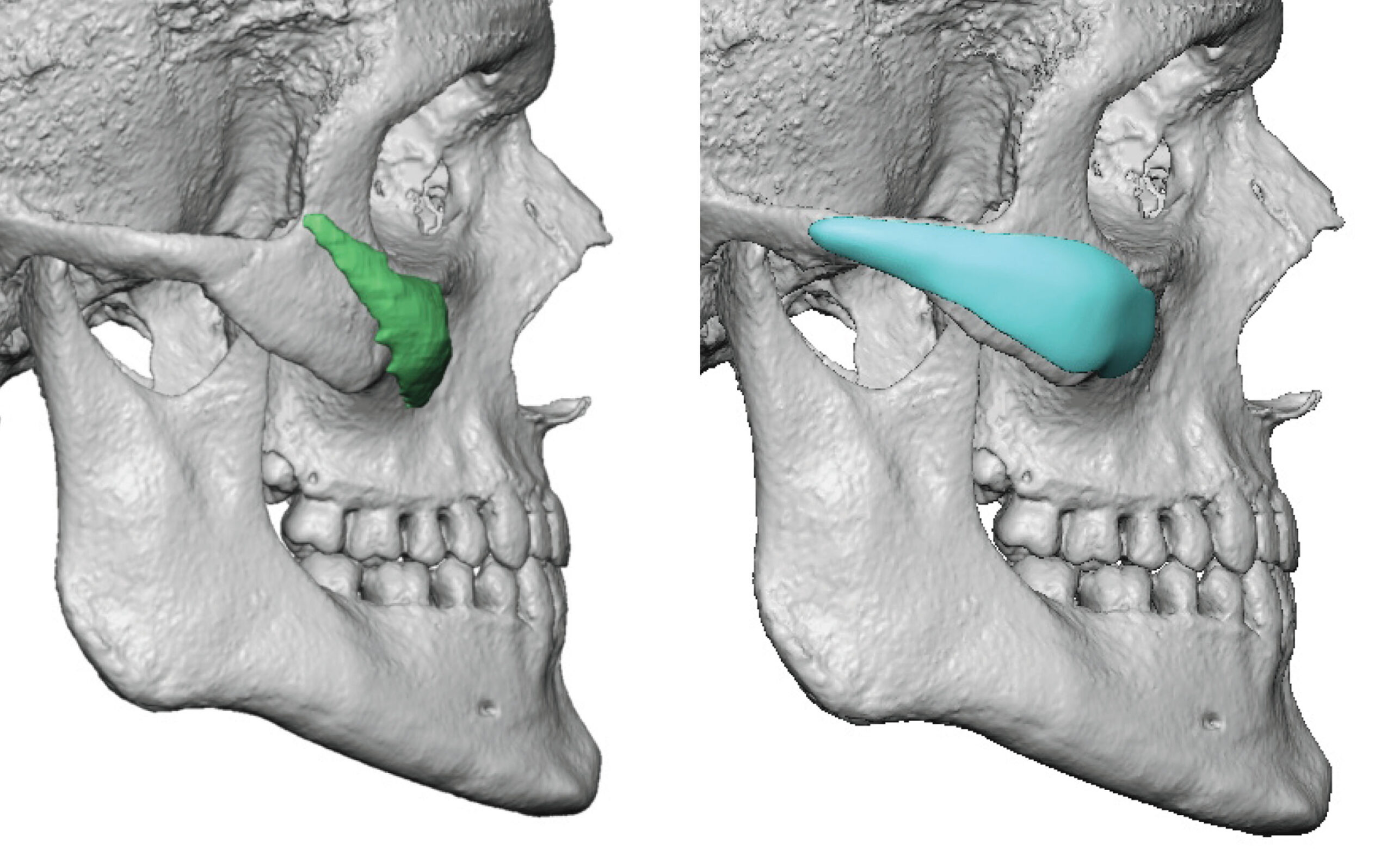
Getting a satisfactory young male cheek augmentation usually means keeping the imlpant footprint on the zygomatic body and arch. Achievable by a custom cheek implant design, not a standard submalar cheek implant.
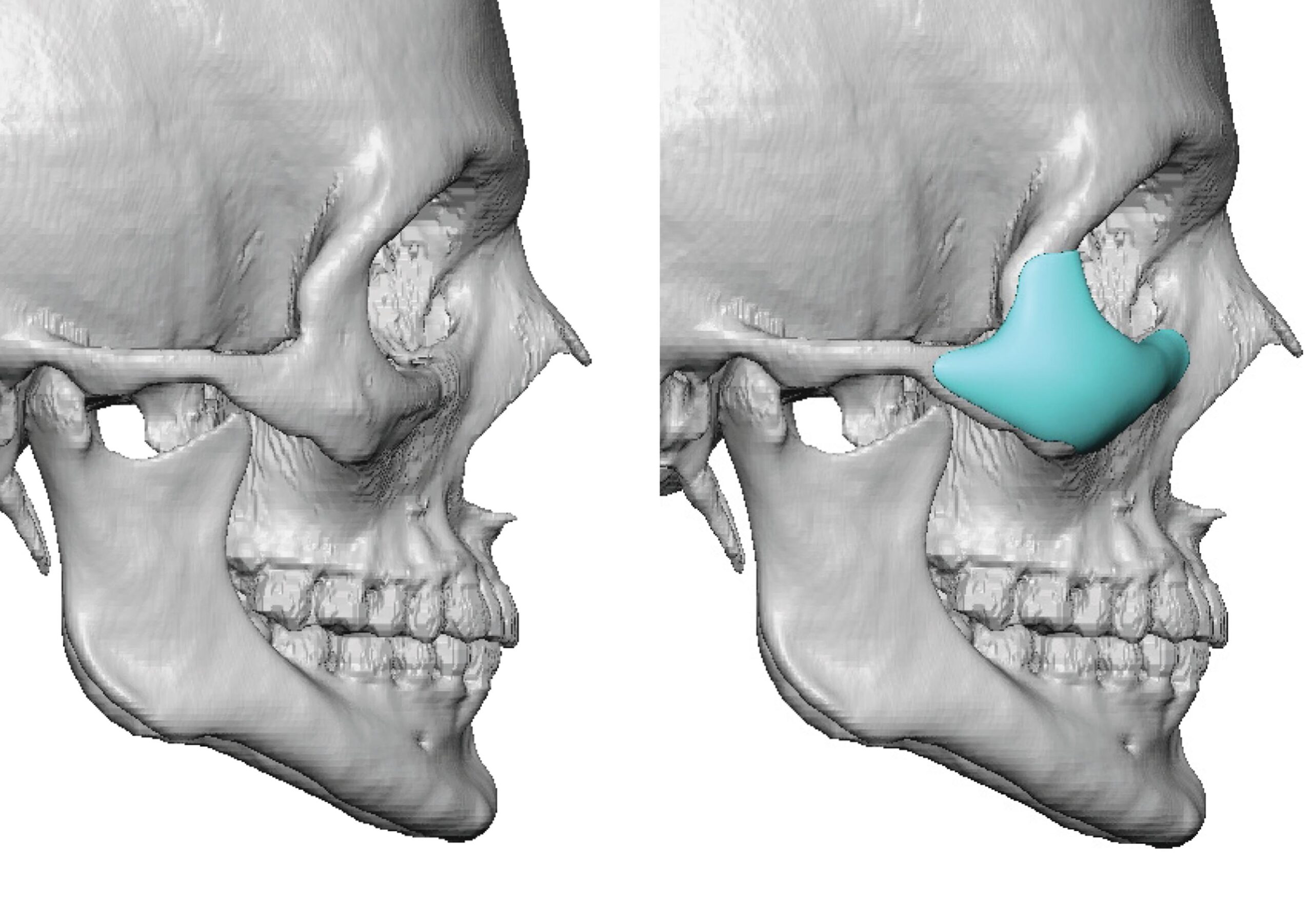
A negative orbital vector (lack of infraorbital rim-anterior malar skeletal projection) associated with increased scleral show and a low lower eyelid position is optimally treated by a custom infraorbital-malar implant. This implant design saddles the infraorbital rim and raises its height to add increased structural support to the lower eyelid and makes a neutral or positive orbital vector.
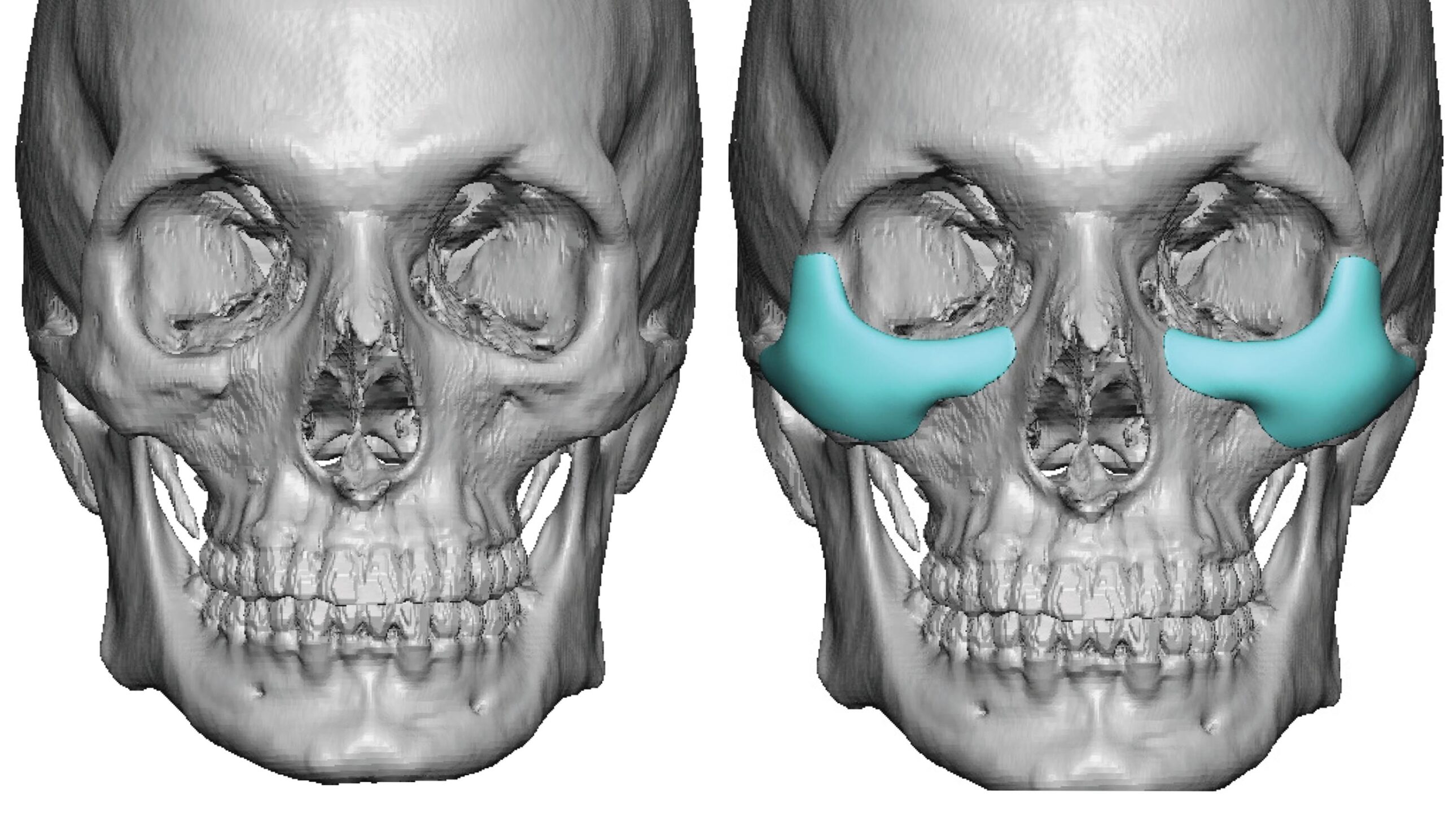
The custom infraorbital-malar implant design for the negative orbital vector patient augments the ZMC complex in an anterior and superior direction as a whole unit…correcting the complete anatomic problem.
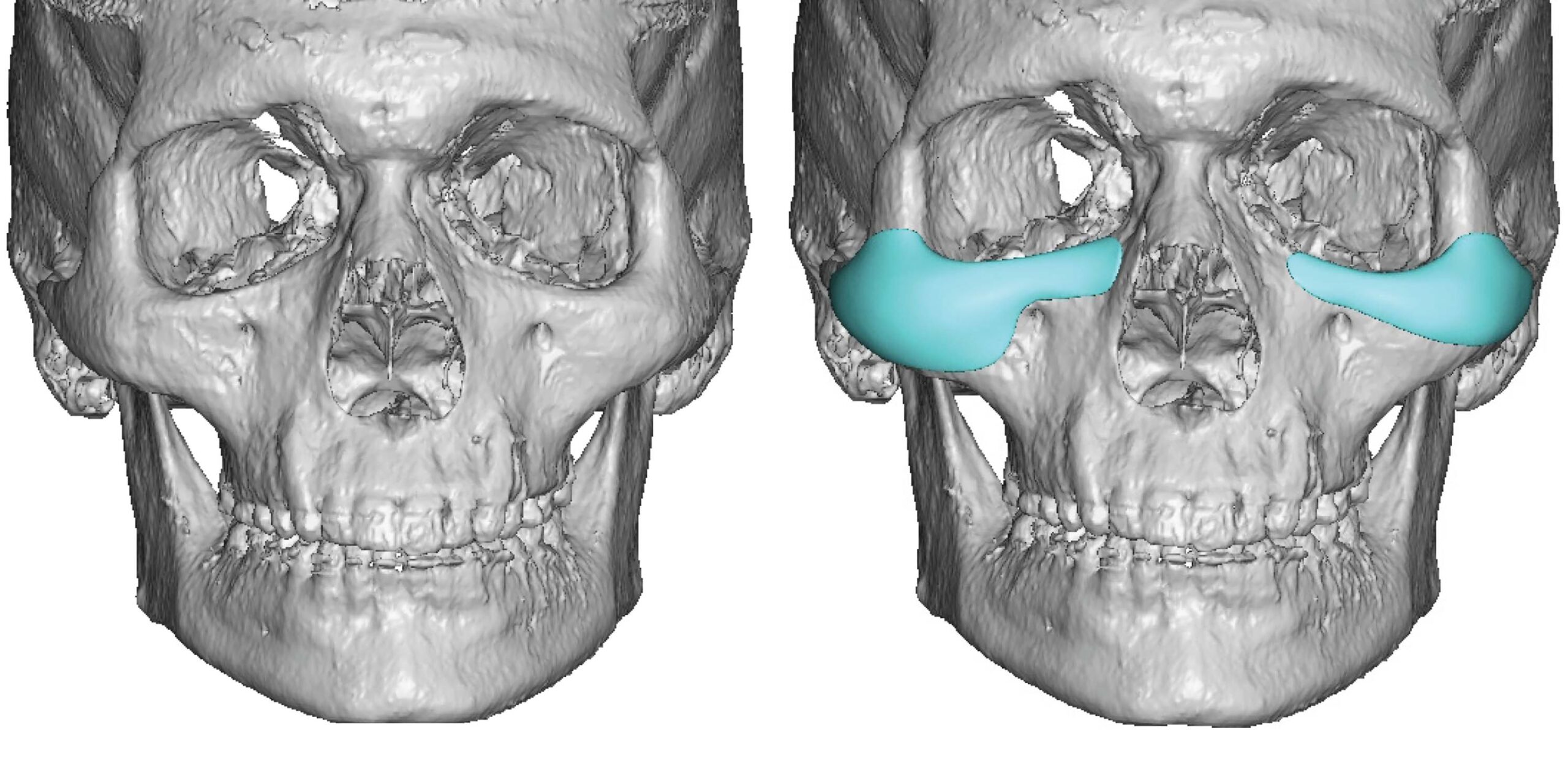
Eye asymmetry is usually associated with infraorbital-malar bone asymmetry. A custom infraorbital-malar implant design can accurately identify the differences between the two sides which is a three-dimensional difference.
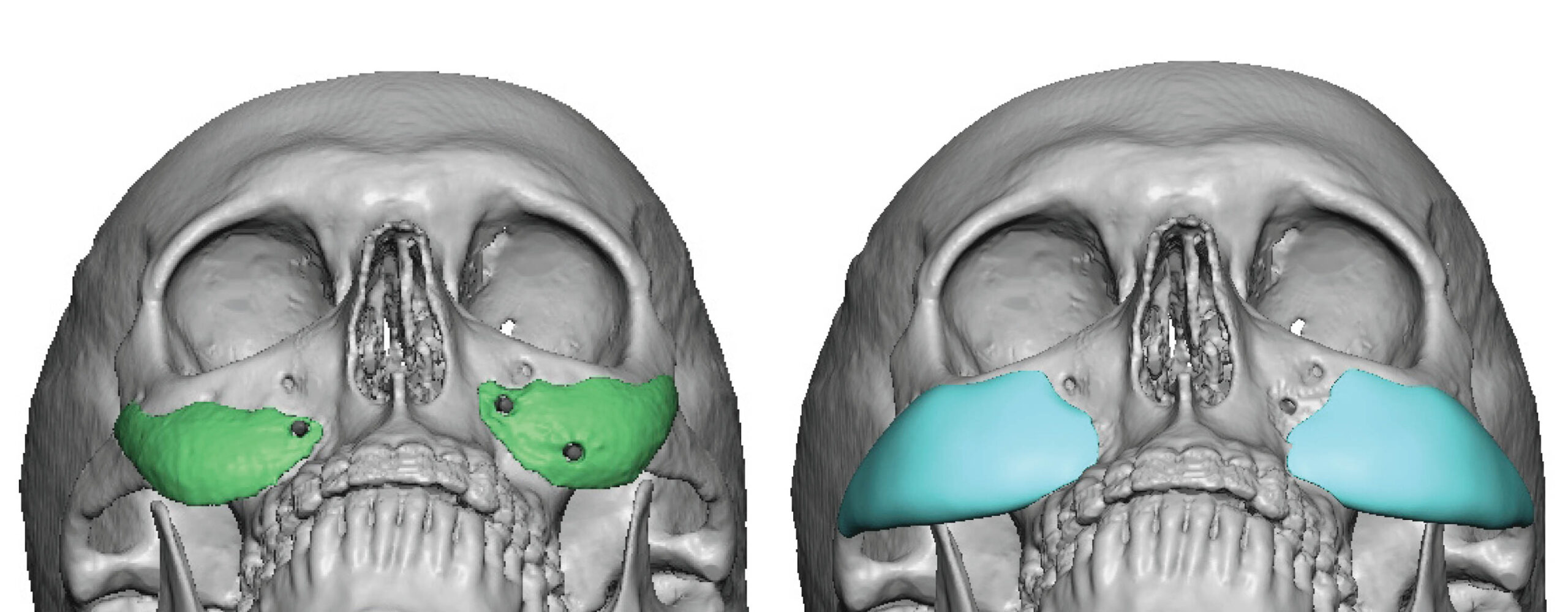
A patient’s prior cheek implants provides valuable information as to how to design new implants that provide an enhanced cheek augmentation effect. In this male patient with existing low anterior standard cheek implants he still underwent injectable fillers to get his desired aesthetic effect. In addition they did not correct the more deficient asymmetric right side. Larger custom cheek implants were designed that more completely addressed these two cheek augmentation goals.
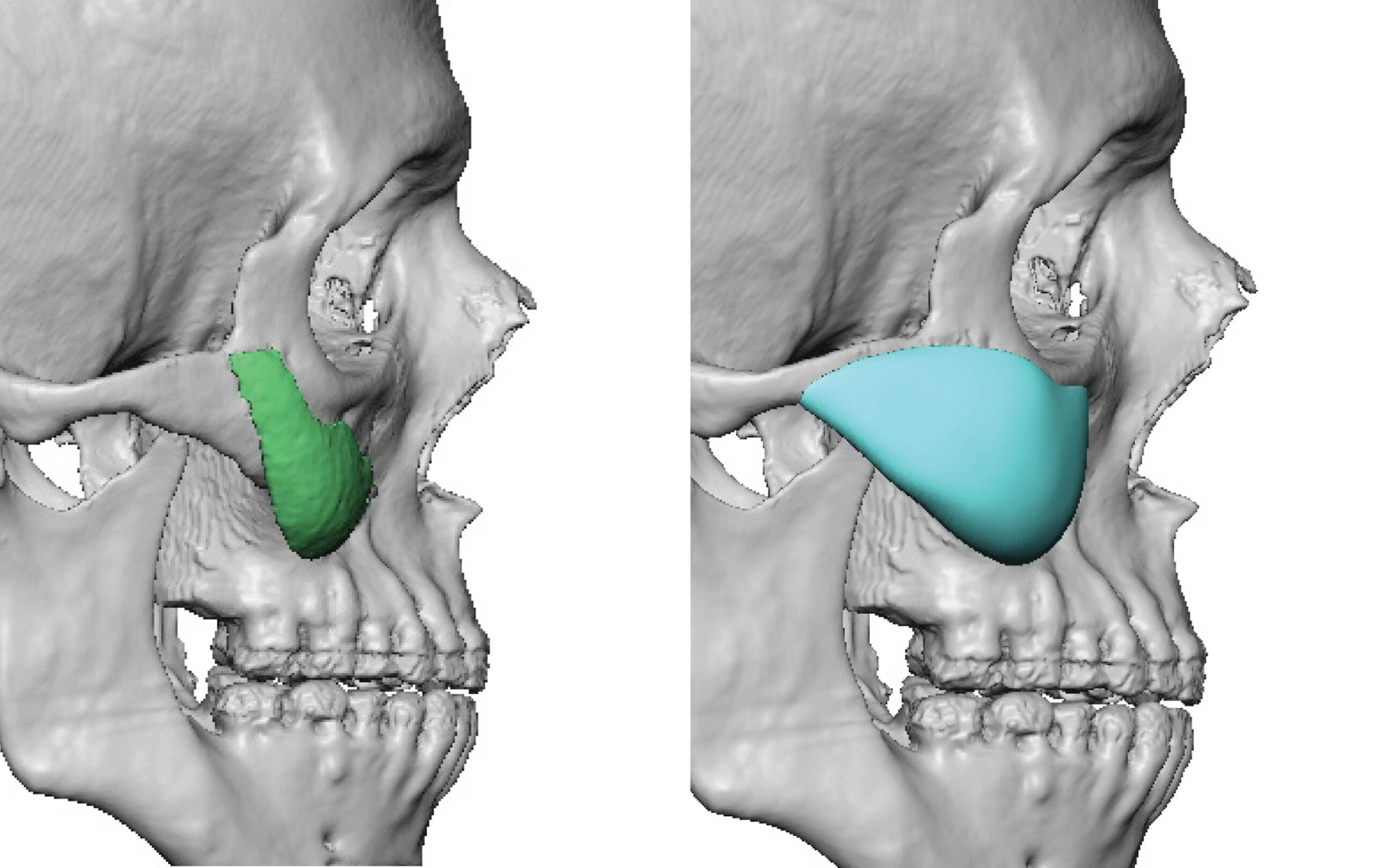
While the position of the standard cheek implants is not ideal the aesthetic effect was beneficial but the patient desired a larger cheek augmentation effect. This allowed a new larger cheek implant to be designed that could adequately address this need.
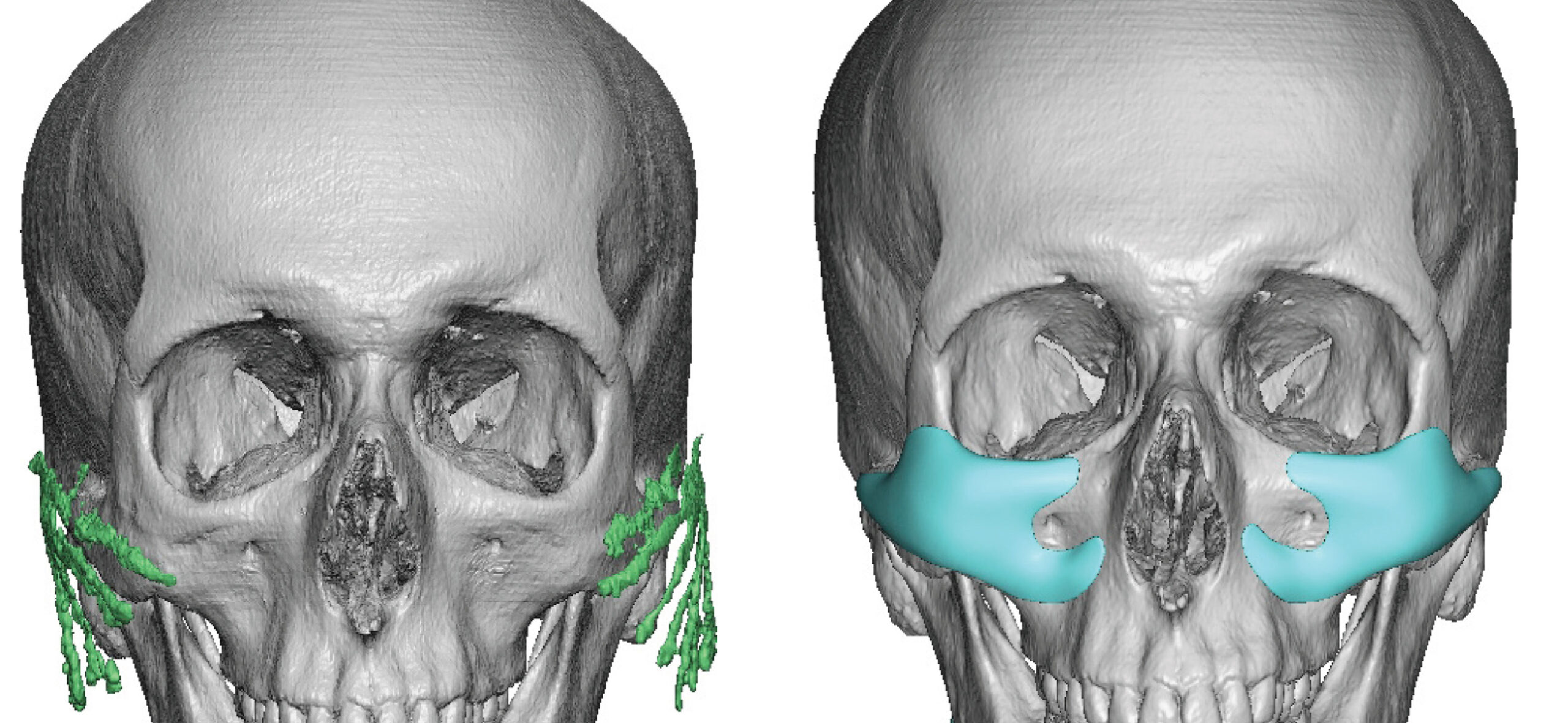
Injectable fillers are a common precursor to the consideration of some form of cheek implants for a permanent effect. The only injectable filler capable of being seen on a 3D CT scan is Radiesse due to its calcium mineral composition. While there is not a direct correlation between filler and implant volume due to their different locations in the tissues, it is useful to know the areas of the cheeks where the filler is to help with the custom cheek implant design
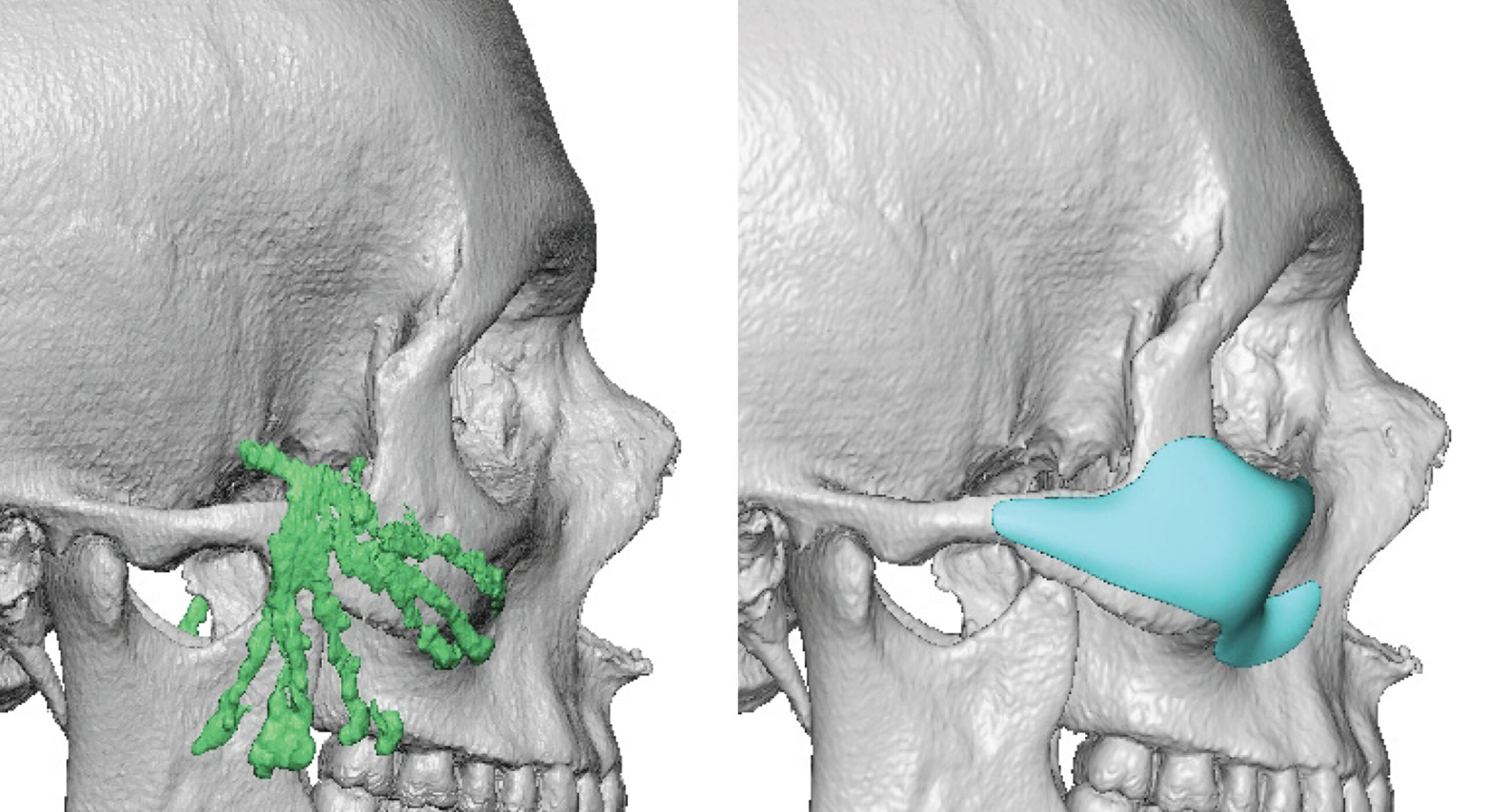
While existing injectable fillers provide a general guide as to where the cheek implant needs to cover to try and replicate the filler effect. But filler can be put in areas where a bone-based implant can not replicate….such as off the bone lower in the cheek area where an implant can not be placed.
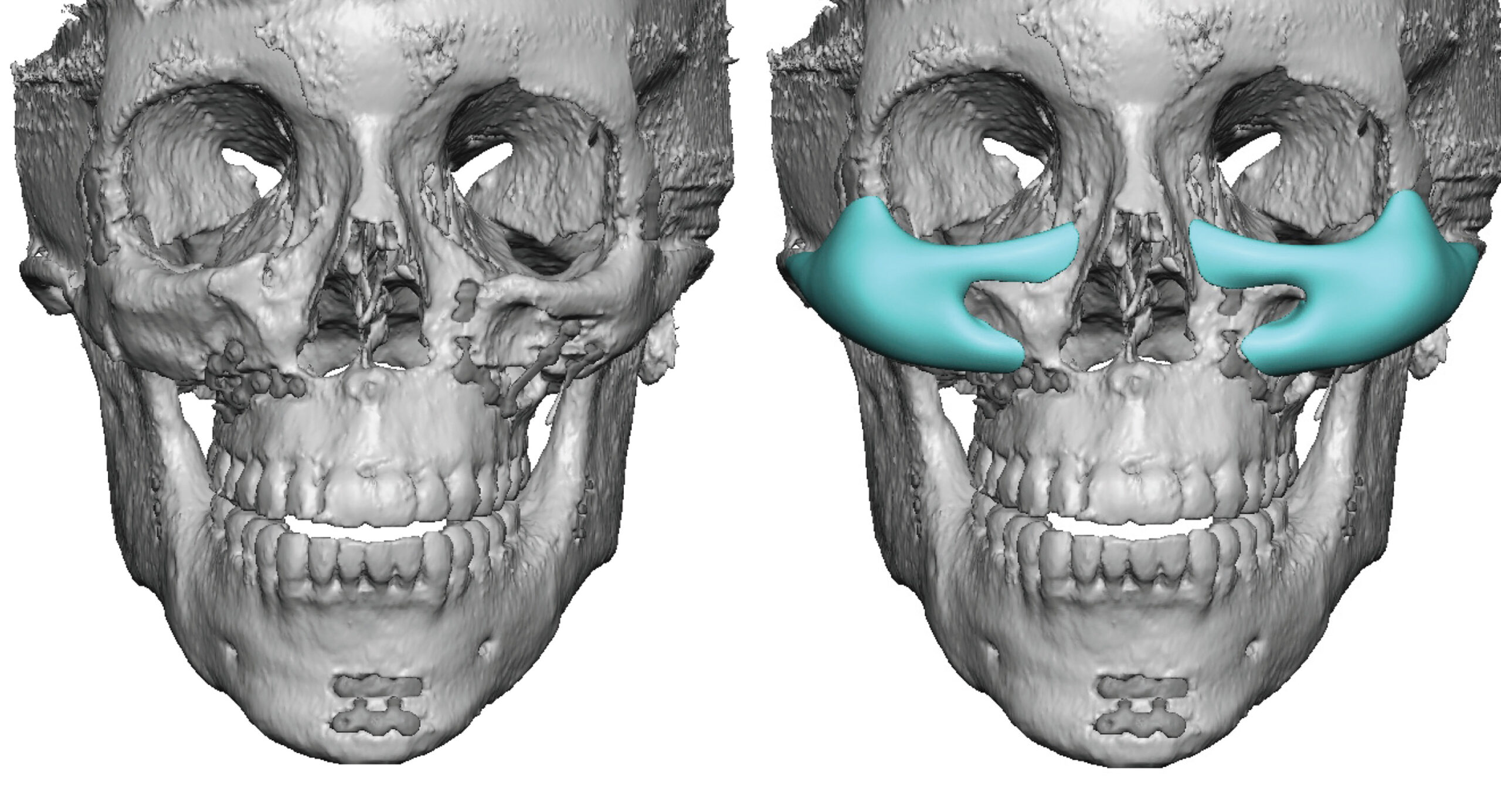
Desire for large custom infraorbital-malar implants to add upper midface projection that a prior ‘failed’ modified LeFort III procedure could not accomplish.
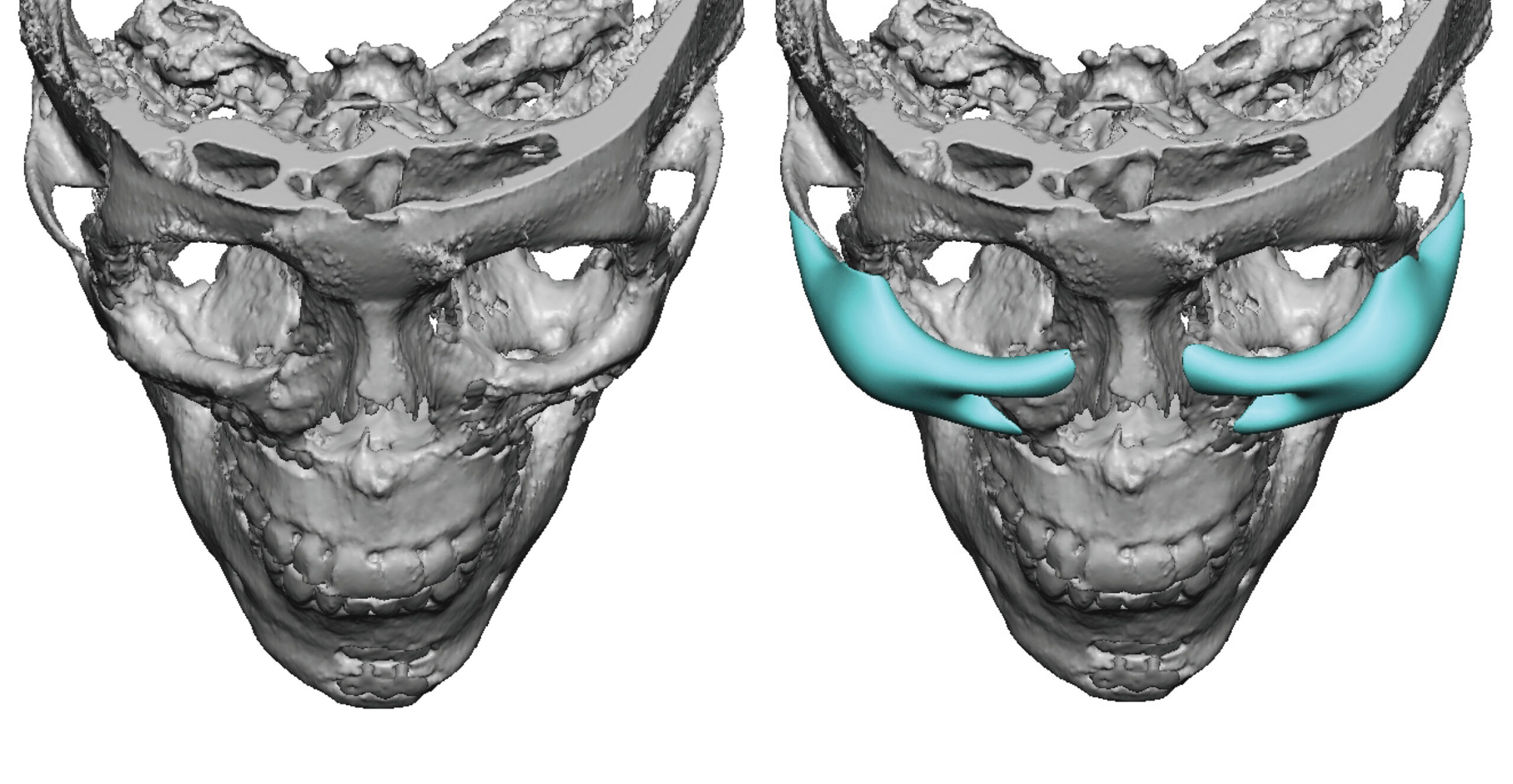
While there is certainly a lot of appeal to moving the infraorbital-malar-maxillary bone to correct projection in this upper midface area it is simply a procedure that has a limited effect of producing a significant change. The definitive procedure if the osteotomy does not work are custom infraorbital-malar implants.

Cheekbone reduction osteotomies are most effectively reversed by custom cheek implant designs. Since the cheekbone reduction has caused a 3D loss of the shape of the cheek it takes a custom implant design to restore it.

Over time (in this case 10 years) a patient may decide that an existing implant would be better if there was less of it. Usually there is a known issue with the implant but not enough to warrant changing it. He was always bothered by his high position on the infraorbital rim as well as too much cheek width. His new custom infraorbital-malar implant design addressed both of these issues.

Large bimaxillary advancements can create facial disproportion above the maxillary osteotomy level. Custom infraorbital-malar implants can help add projection to this upper facial area that was ‘left behind’.

Custom infraorbital-malar implants after bimaxillary advancements to augment what was ‘left behind.’

Custom infraorbital-malar implangts can help expand a narrowed lateral orbital-cheek width.

Even with a custom cheek implant design the patient may not fully know what its exact aesthetic effects wlll be. As a result a custom implant design may be done for replacements with a better understanding of the various millimeter dimensional changes. Such was the case for this Asian female who had custom cheek implants to replace unsatisfactory results from using standard cheek implants. Once the custom cheek implants were in place, and they provided good improvement, she now new best how to make a few additional millimeter changes to achieve her optimal cheek augmentation result.

In the negative orbital vector patient the outer infraorbital rim swoops downward due to the lack of cheekbone development. In some ways a negative orbital vector is like a depressed cheekbone fracture. The IOM implant must address projection along the whole ZMC complex.
Custom Midface Implants
While midface implants are typically envisioned as cheek or infraorbital types, a custom implant approach allows augmentation designs not previously seen or imagined for this part of the face. The entire midface can be covered in a variety of designs that can replicate what LeFort advancement osteotomies (minus the tooth movements) can traditionally do. Whether it is more limited premaxillary-paranasal or an an inferiorly extended infraorbital-malar implant designs or a total midface mask design, custom implants for the midface open up potential new methods of facial augmentation effects.
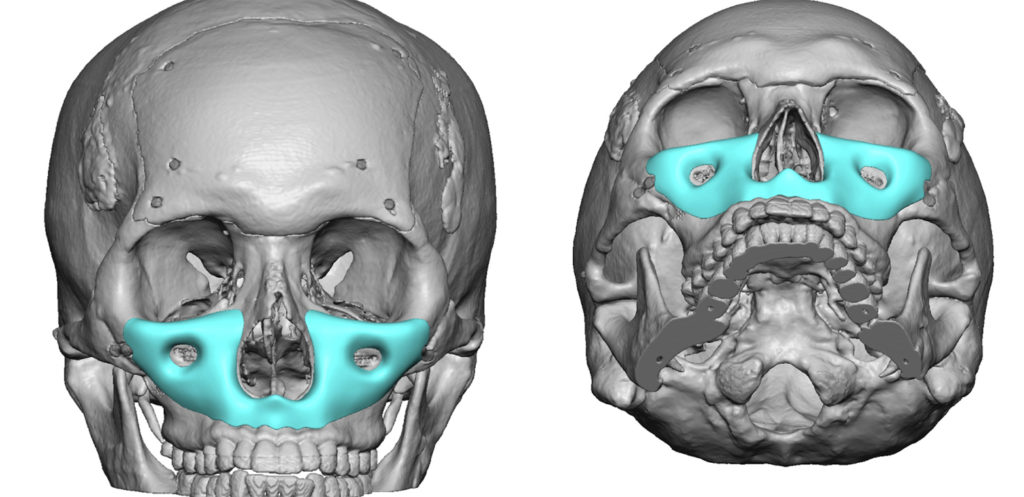
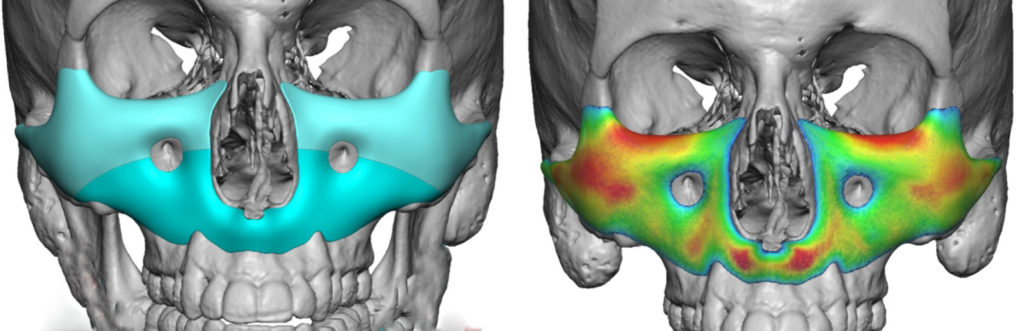
Custom two-piece midface mask implant that required combined in-traoral and lower eyelid incisions due to extensions over the infraorbital rims and up along the lateral orbital wall.
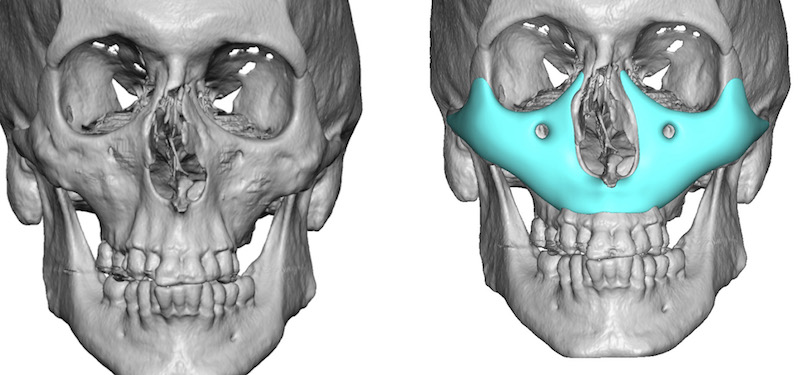
Custom midface mask implant that could be inserted intraorally as there was no saddling of the infraorbital rims.
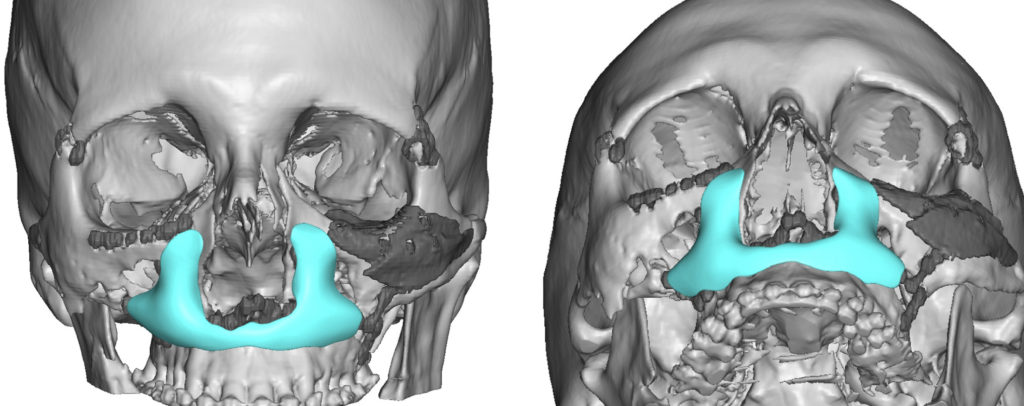
Custom central midface implant for reconstruction of traumatic bony deformities of the pyriform aperture regions.
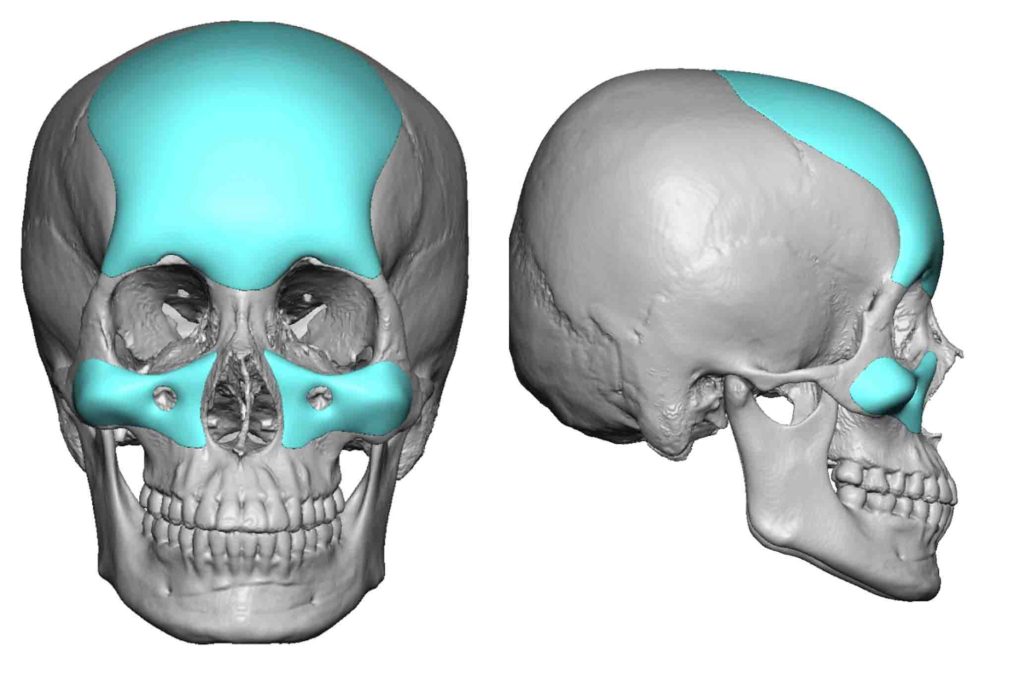
Custom forehead and midface implants in Asian female for exclusive anterior facial projection.
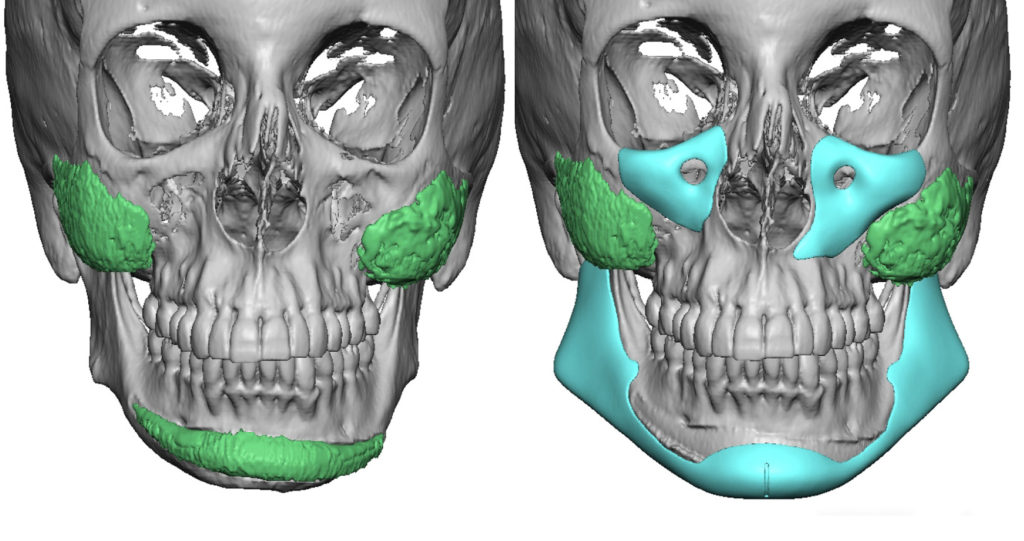
Custom female infraorbital-maxillary implants for midface asymmetries and age-related changes.
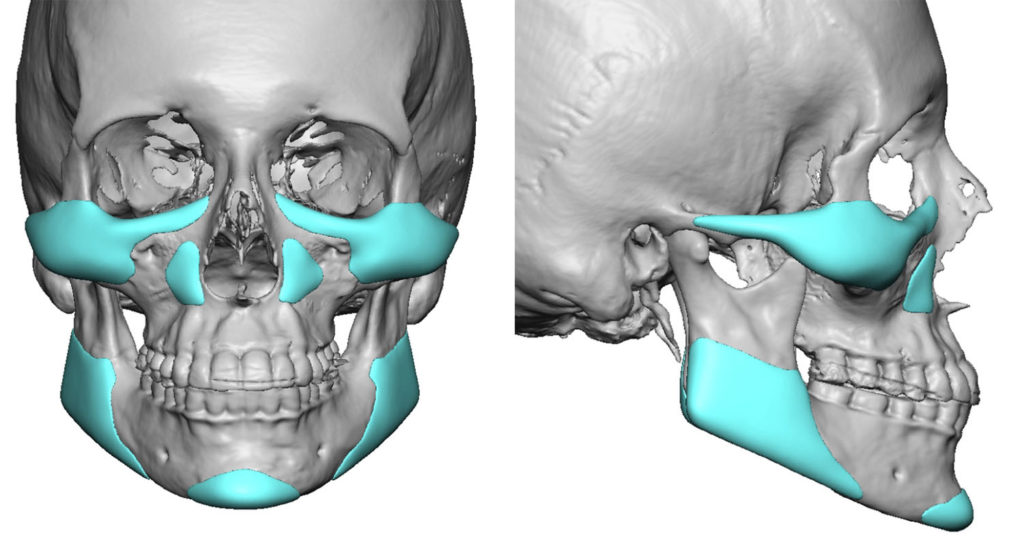
Custom paranasal, extended cheek, chin and jaw angle implants for female facial augmentations.
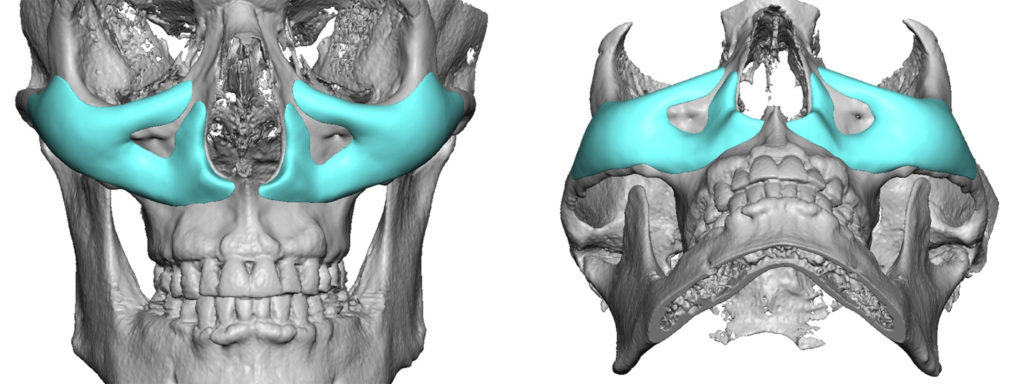
Custom infraorbital-malar-maxillary implant design for male with midface deficiency.
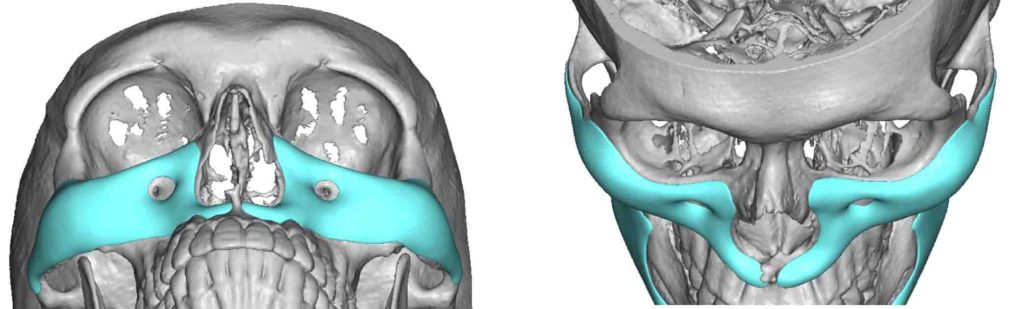
Custom midface-malar implant design for center and lateral midface deficiency.
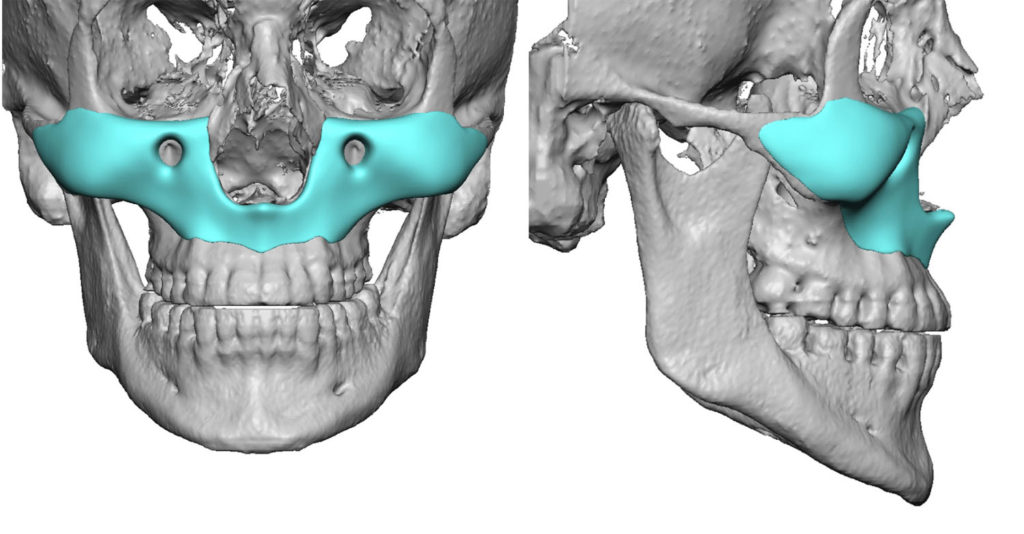
Custom midface implant after LeFort I osteotomy for a more complete midface augmentation effect.
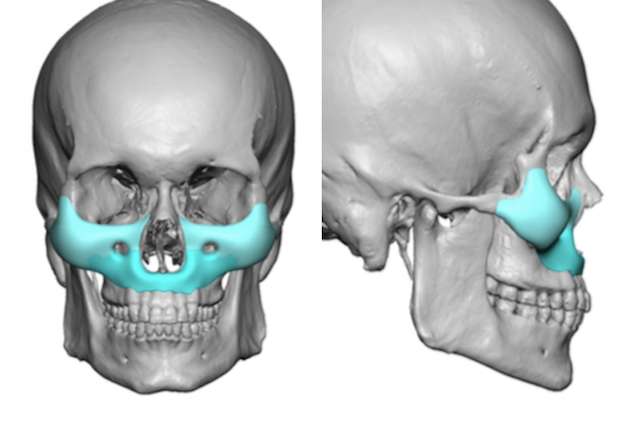
The custom midface mask concept is to bring the entire midface forward, usually without adding any cheek width. This provides a more complete total midface augmentation effect than any form of a LeFort osteotomy.

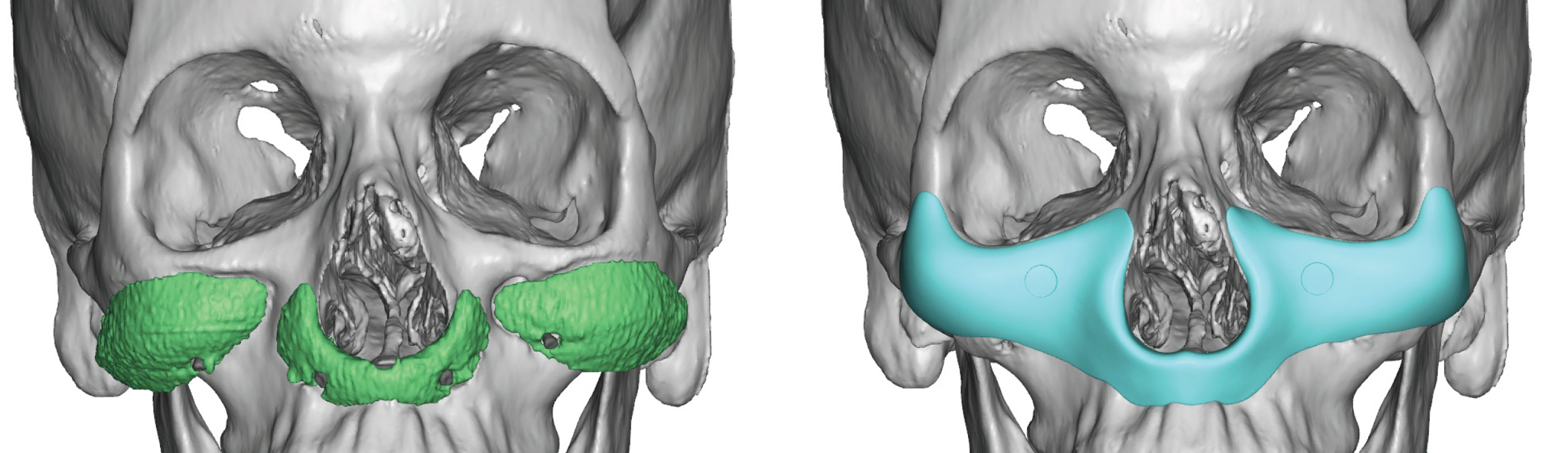
In this patient he first had custom infraorbital-malar implants (green color) and discovered years later that he wanted a more complete midface augmentation effect. A second custom infraorbital-maxillary implant (teal color) was added from an intraoral approach to create more total midface horizontal projection.

Infraorbital-malar bony recession is often associated with an overall maxillary deficiency as all the midface bones develop together. Sometimes augmenting one part of the overall facial deficiency (custom infraorbital-malar implants in green) eventually draws attention to what still remains deficient. (secondary custom infraorbital-maxillary implant overlay in teal color)
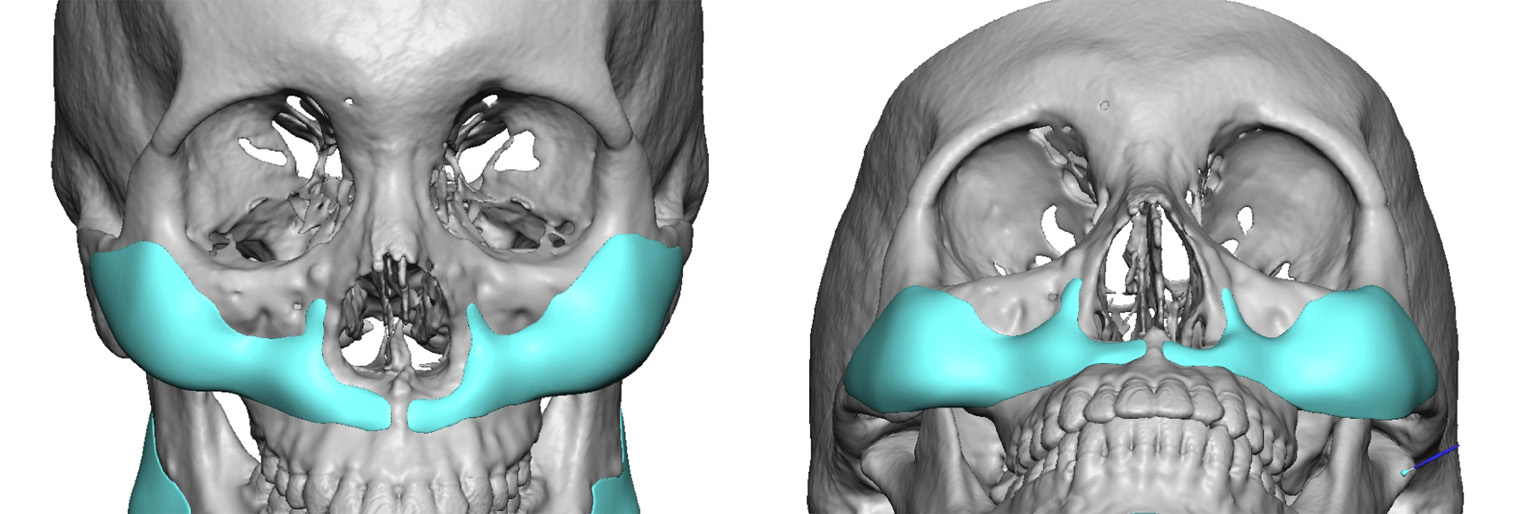
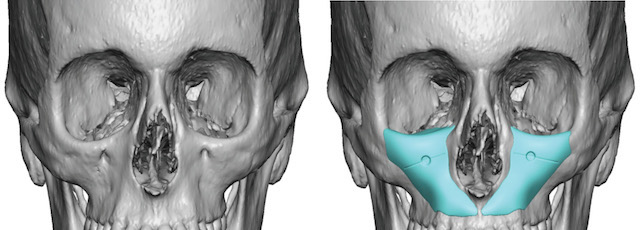
Replacement of existing standard paranasal and cheek implant design that provides a complete midface augmentation effect without adding any cheek width increase. In effect this midface implant design pulls the entire midface forward minus the alveolar bone and teeth.
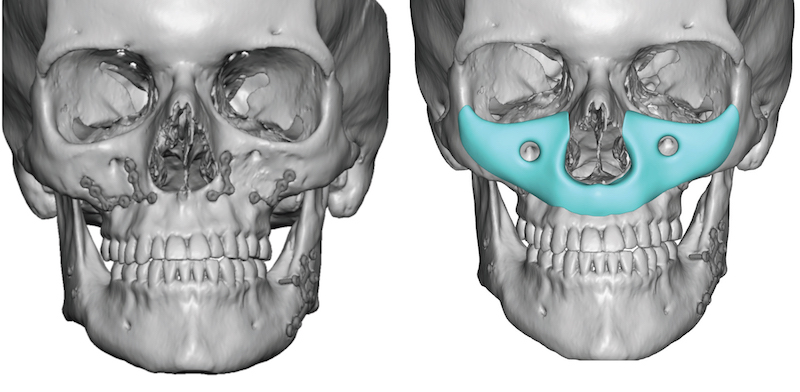
A LeFort I osteotomy provides functional and aesthetic improvement to the dentoalveolar region of the midface only. For a more complete midface augmentation effect, similar to a LeFort III effect, a custom midface implant is needed to cover the remaining surface area of the midface that has been left ‘behind’.
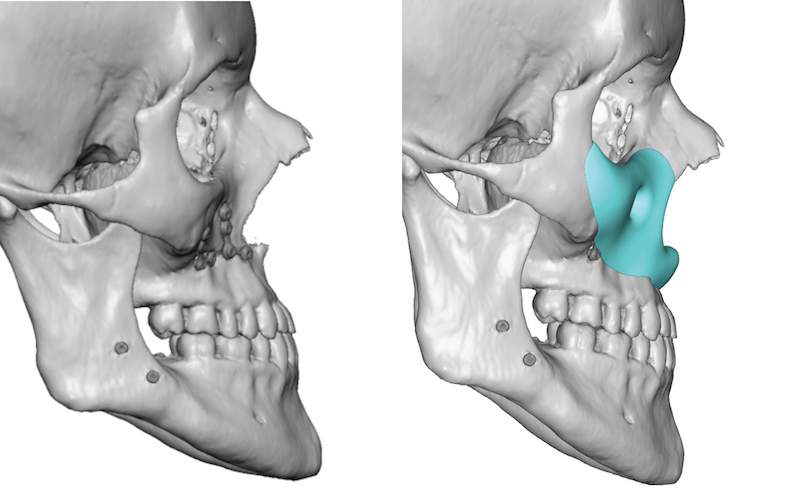
While a LeFort I osteotomy creates a better occlusal relationship it is unable to improve a flatter midface above the osteotomy line. A custom midface implant provide a completion of the midface augmentation effect up through the infraorbital rims.
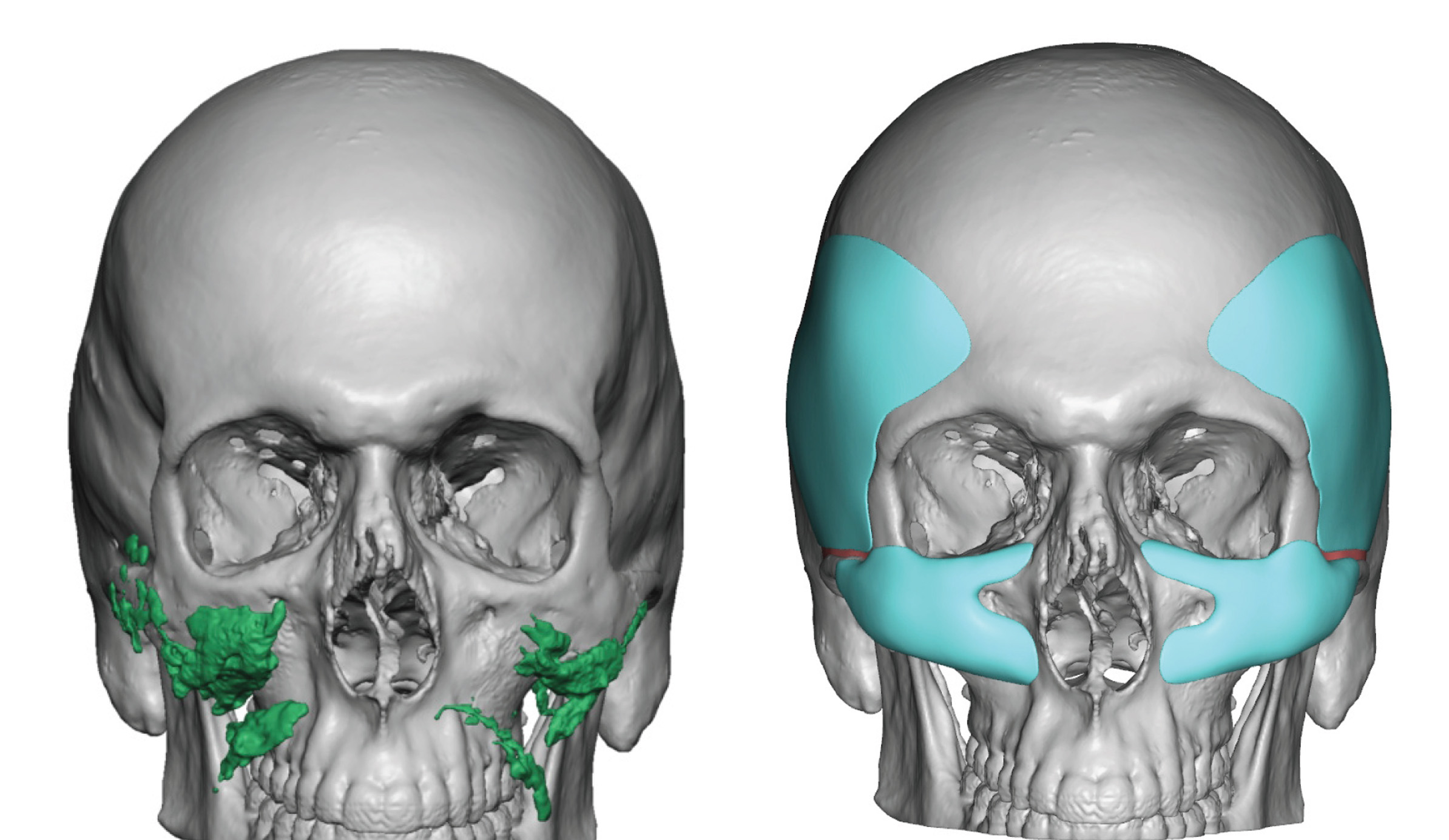
Central midface deficiencies are often treated by injectable fillers which can effectively make the midface fuller and partially compensate for midface skeletal hypoplasias. But when one tires of injectable filler and desires a permanent midface augmentation effect a custom infraorbital-anterior malar-maxillary implant can provide an enhanced midface augmentation effect. Such an implant is placed through combined intraoral and lower eyelid incisions.
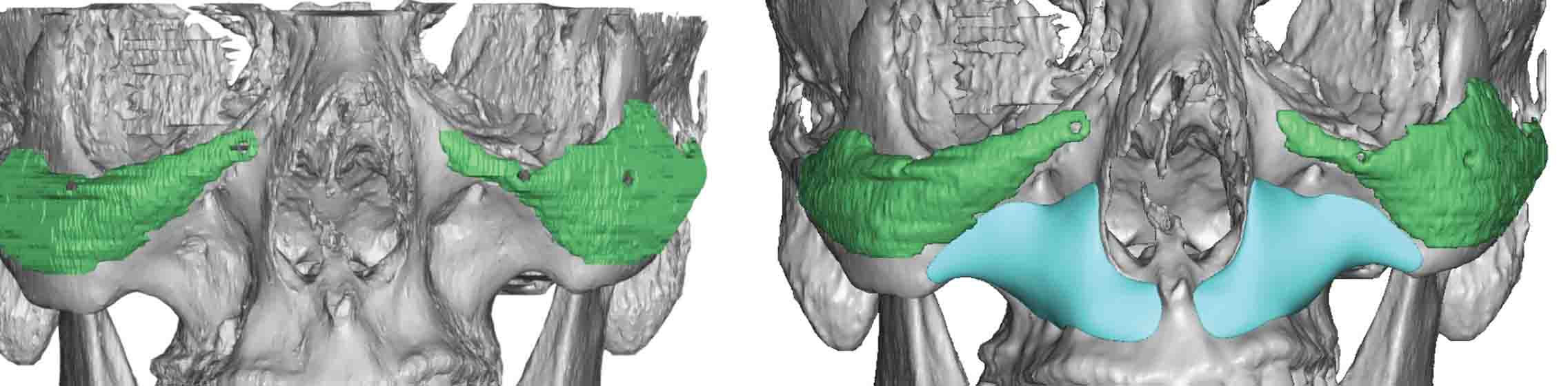
Some midface deficient patients after getting custom infraorbital-malar implants decide that they want more complete midface fullness. They can then do custom paranasal-maxillary implants placed intraorally for an enhanced midface augmentation effect. Notice in the before 3D CT scan how deep or concave the maxilla is outside of the pyriform aperture bone of the nose…. a good indication for not just paranasal augmentation but the entire maxilla.
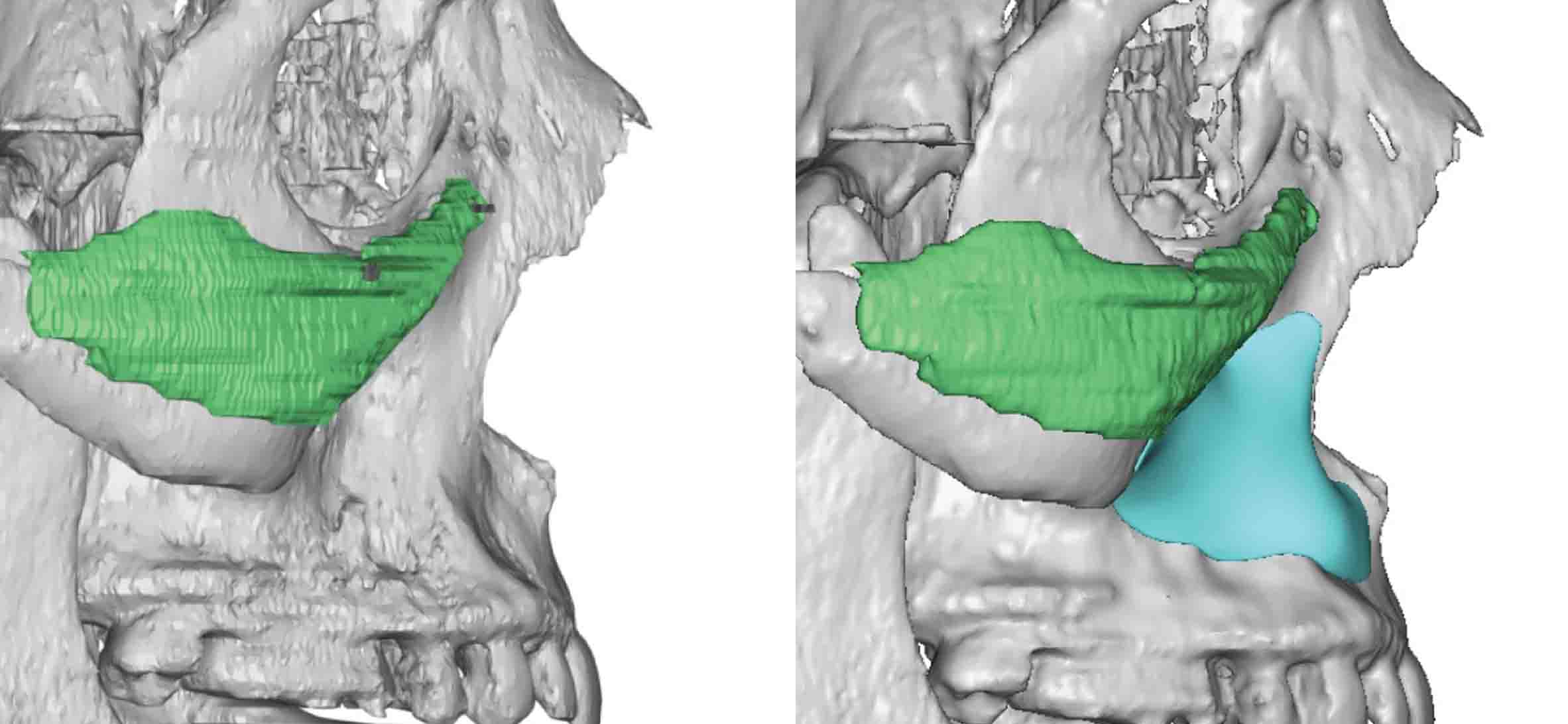
Custom paranasal-maxillary implants add an augmentation to the lower midface that may be missing in some custom Infraorbital-malar (IOM) implants. Unlike custom Implants which are surgically placed through the lower eyelid, custom paranasal-maxillary implants are placed through incisions inside the mouth (intraoral approach).
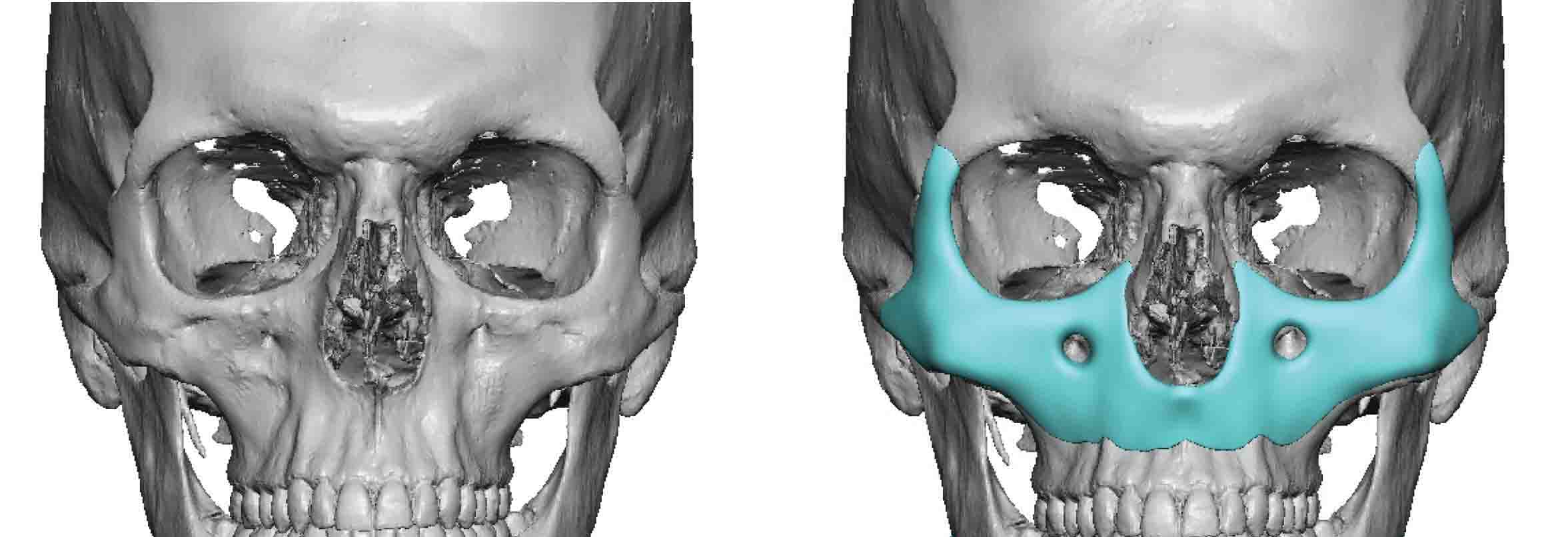
LeFort III Custom Midface Implant
A custom total midface implant has essentially the same effect as a LeFort III osteotomy (minus the alveolar-tooth movement) as it pulls the entire midface forward.
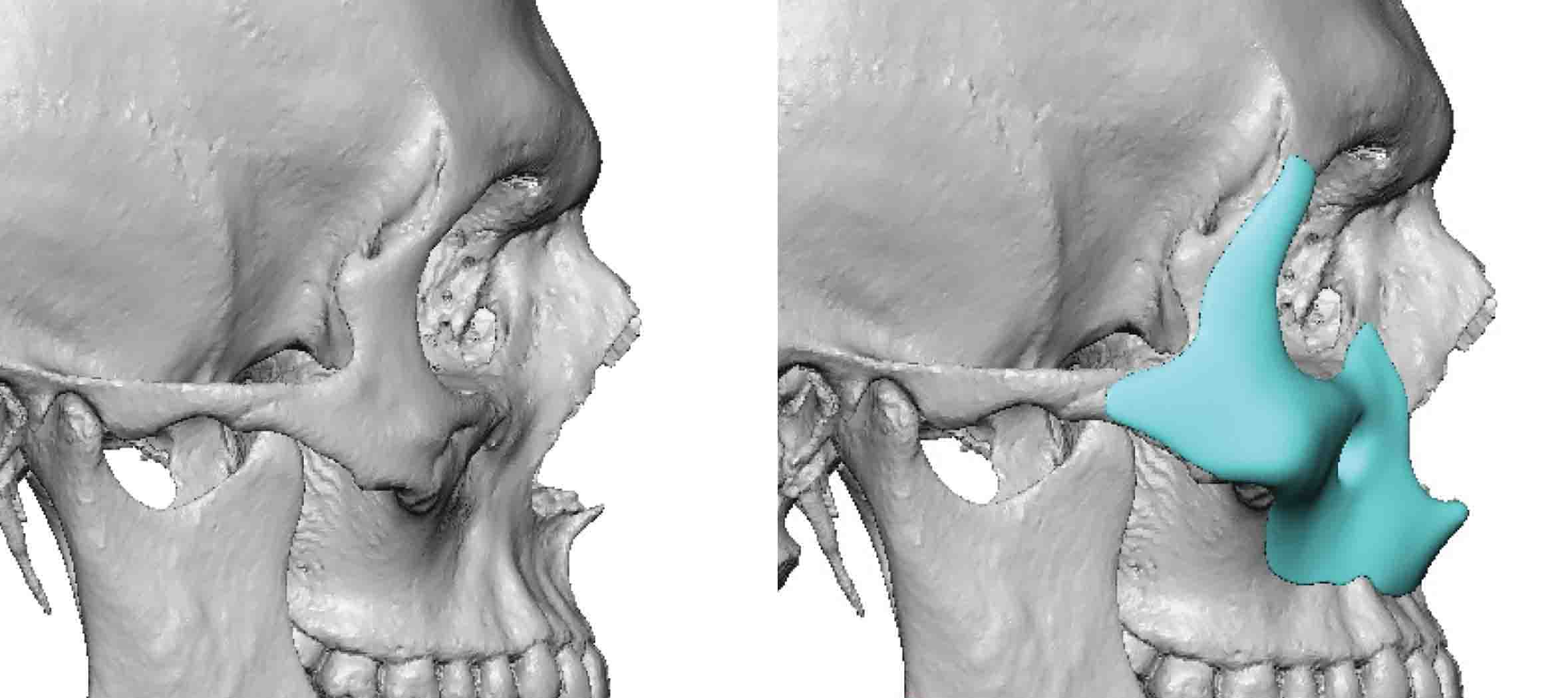
In a total custom midface implant it extends up along the lateral orbital rim all the way up to the tail of the brow bone. Unlike a LeFort III osteotomy it exerts its effect in smooth and continuous fashion without any disruption of the contours of the expanded bony surfaces.
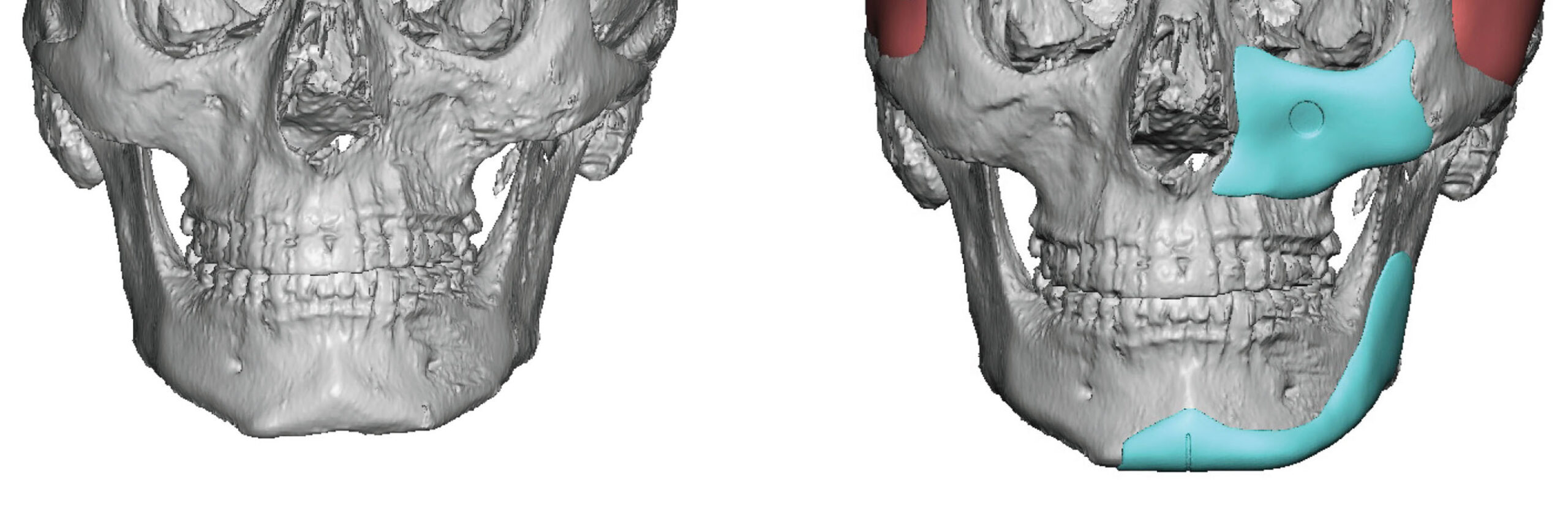
In craniofacial asymmetry with a significant right plagiocephaly the contralateral left midface and jawline were deficient. A prior left zygomatic expansion osteotomy provided some benefit but was inadequate. With mirroring software the deficiencies of the left midface and jawline were identified and custom implants made to augment them.

A unique form of custom midface implant is one that augments the convex lines of the midface. (pyriform aperture-infraorbital-malar bony areas) The concave maxillary surface is left uncovered. This provides a midface projection increase that helps to provide definition rather than overall modfacal volume.

The convex custom implant pushes out the recessed skeletal ‘rims’ of the midface but leaves behind the face of the maxiila. This helps creates more definition rather than generalized midface projection increase.

Paired midface mask implant design with no connection across anterior nasal spine area. The locations of the infraorboitsl nerves are marked for material removal during surgery.

Secondary infraorbital-maxillary implant augmentation over initial custom imfraorbital-malar (IOM) implants using an overlay implant concept. The original IOM implants were placed through a lower eyelid approach while the new overlay implants were placed through an intraoral approach.

Custom Cheek Implant Overlay for Increased Augmentation
The implant overlay concept is easiest to appreciate from the side view….adding increased projection by adding a second implant layer. In the right anatomic location this can be better than replacing it with one larger implant.

The placement of standard cheek implants on the face of the maxillary creates undesired fullness due to a convex-shaped implant on a concave bone surface. A custom designed midface implant that better matches the underlying bone shape, while also providing greater surface area bone coverage creates a more controlled augmentation effect.

Standard cheek implants, particularly when placed over the central maxillary concavity create an unnatural bulge/fullness above the nasolabial fold. This is usually not what most patients want to achieve. Her desire was an overall midface augmentation effect which is better achieved by a custom midface mask implant design.

In the negative orbital vector patient the problem is the entire ZMC bony complex is recessed (withdrawn and depressed). This includes the cheek bone and infra- and lateral orbital rims. Thus a negative orbital vector custom implant essentially provides total ZMC augmentationj.
Custom Orbital Implants
Custom orbital implants are used to augment or correct deficiencies of the orbital rims and orbital floor. Providing precise augmentation to the delicate contours of the orbital rims and infraorbital volume are good indications for a custom implant approach using the patient’s 3D CT scan. Tear troughs and undereye hollows due to infraorbital bone recession are common aesthetic indications for their use. Reconstructive indications are orbital rim asymmetries, infraorbital rim-orbital floor asymmetries due to vertical orbital dystopia and correction of depressed infraorbital rim-floor from prior orbito-zygomatic (ZMC) fractures.
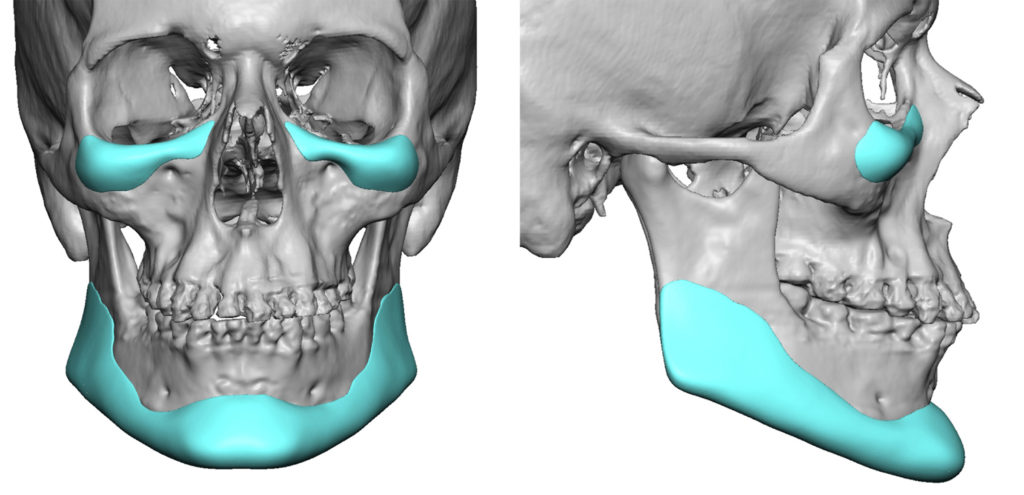
Custom infraorbital rim implants for undereye hollows combined with a custom jawline implant in a male.
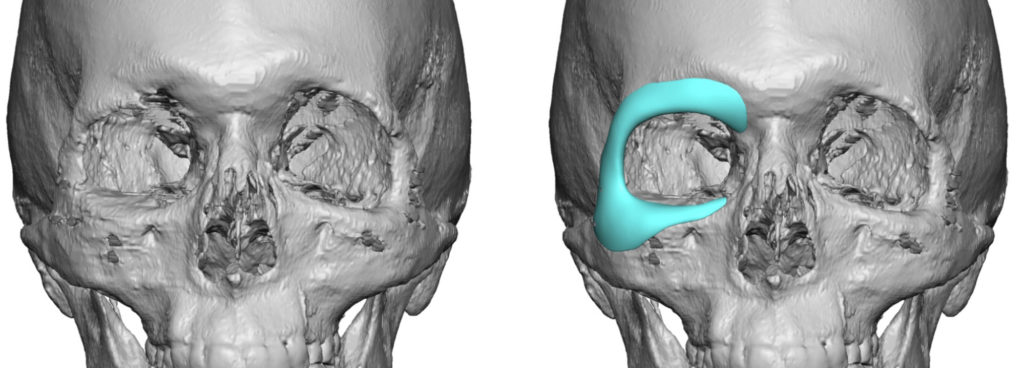
Custom right periorbital implant for orbital asymmetry after multiple prior reconstructive efforts.
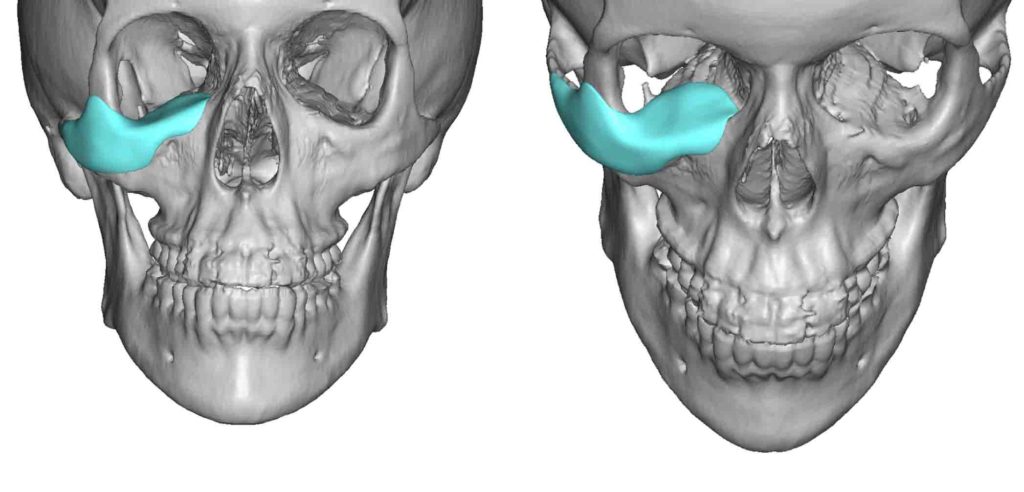
Right vertical orbital dystopia of 3mms correction with custom orbital rim-floor implant.
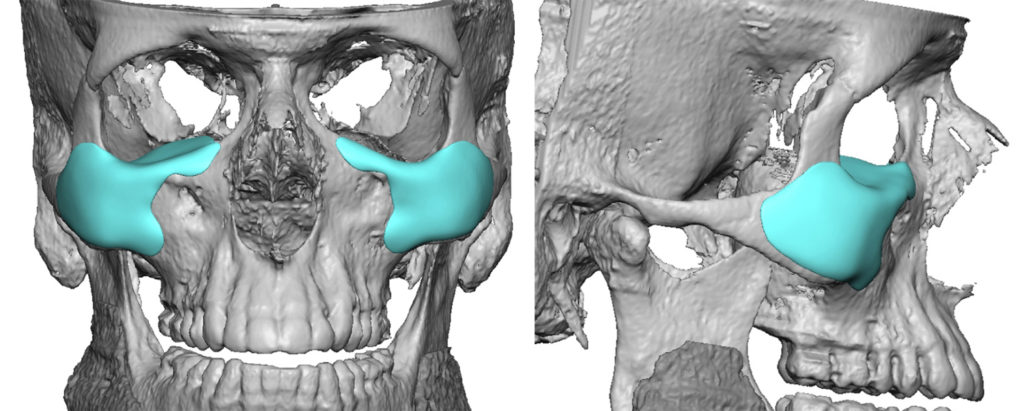
Bilateral custom cheek implants with right orbital rim-floor extension for orbital asymmetry correction.
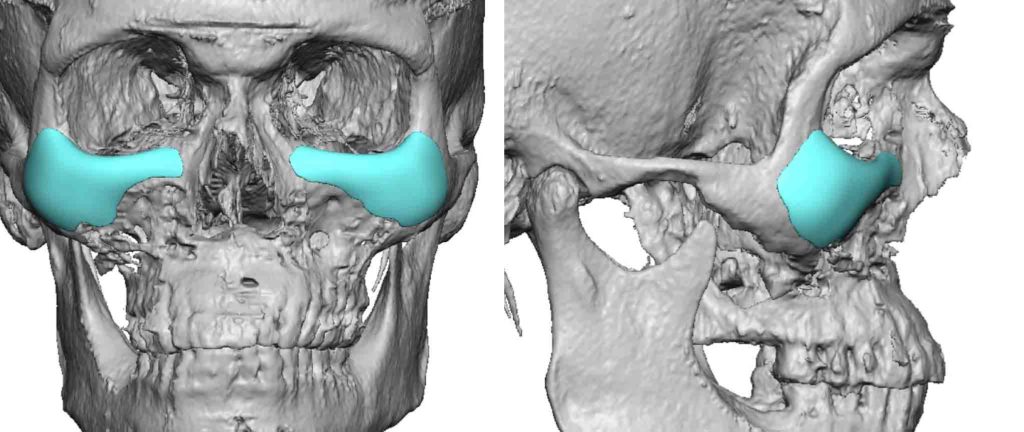
Negative Orbital Vector Implants
Custom infraorbital-anterior malar implants for correction of a negative orbital vector.
Custom Periorbital Implants
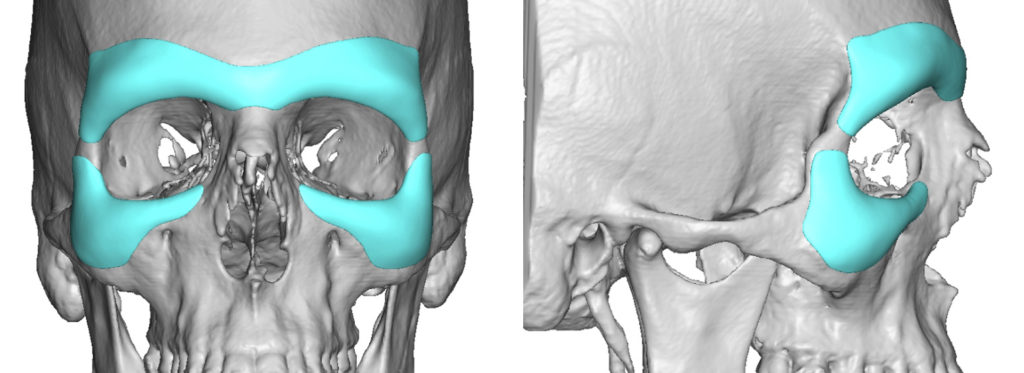
Custom brow bone implants combined with custom infra lateral orbital rimimplants for a circumferential orbital rim augmentation effect for bulging eyes.
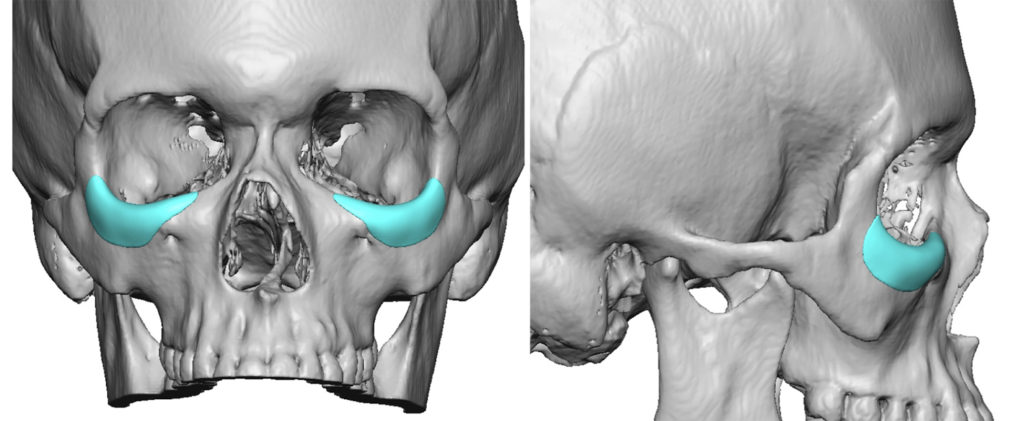
Custom lateral infraorbital rim implants for congenital lateral infraorbital rim defects.
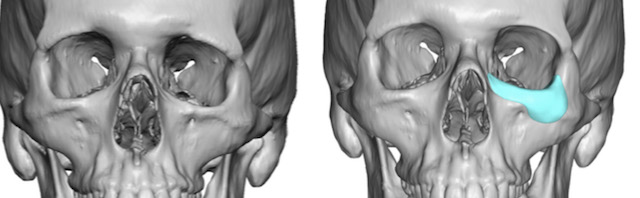
Left 5mm custom orbital rim-floor implant for vertical dystopia correction.
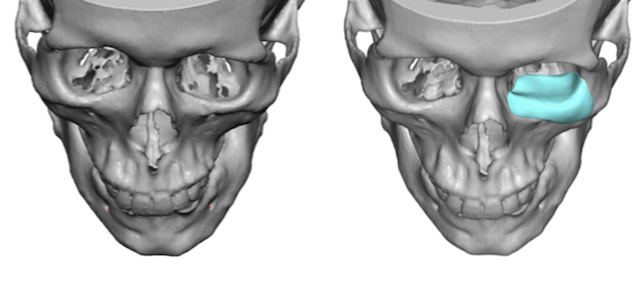
Being able to achieve a precise match to the opposite normal orbital rim and floor is of tremendous benefit in vertical orbital dystopia surgery.

In vertical orbital dystopia how different is the level of the infraorbital rim and the cheek from that of the opposite normal side….only a 3D CT scan and a custom implant design can precisely determine. But treatable amounts for aesthetic vertical orbital dystopias are in the range of 2 to 5mms vertical discrepancy.
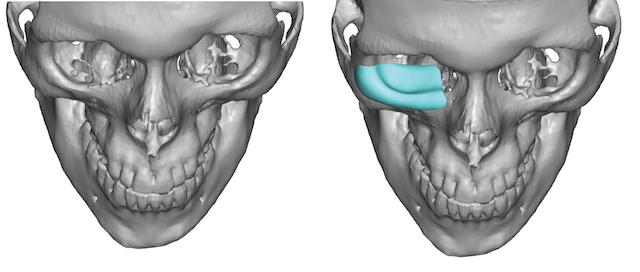
Vertical orbital dystopia always involves an orbital floor level difference from the normal side. But only a 3D CT scan and a custom design can determine the exact location of those orbital floor differences.
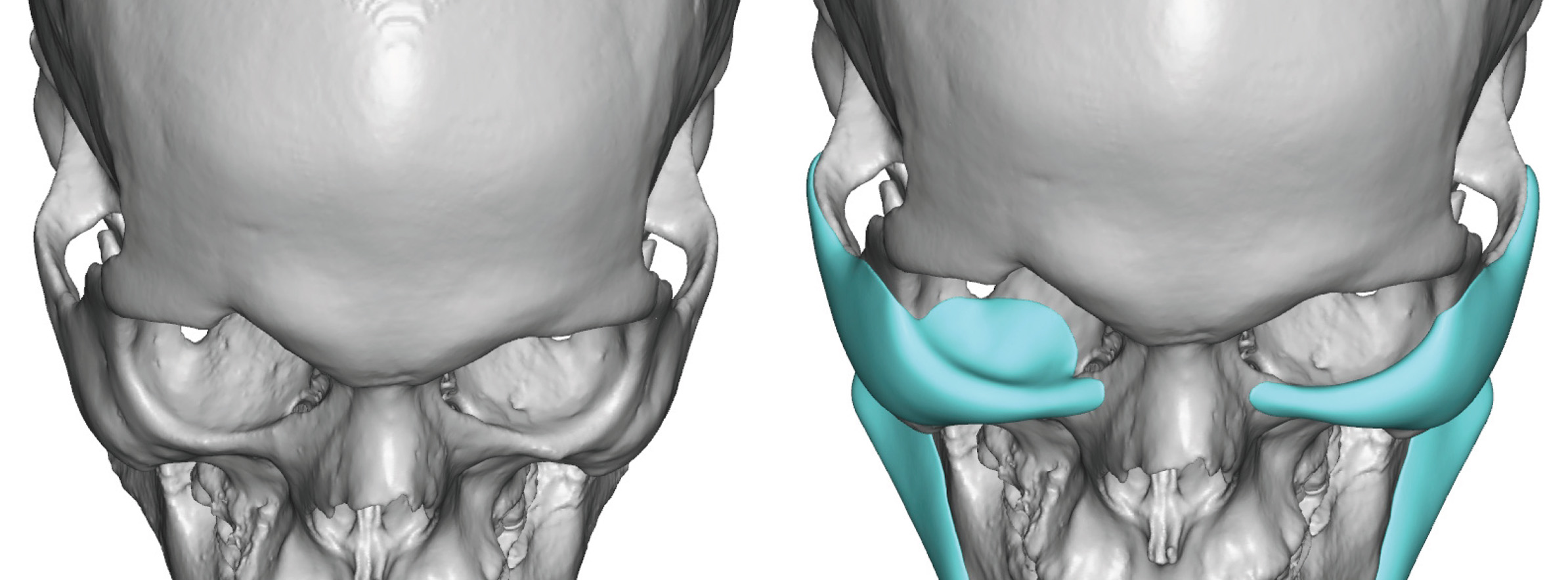
Custom infraorbital-malar implants can be designed to incorporate an orbital floor component for the simultaneous correction of modest levels of vertical orbital dystopia.
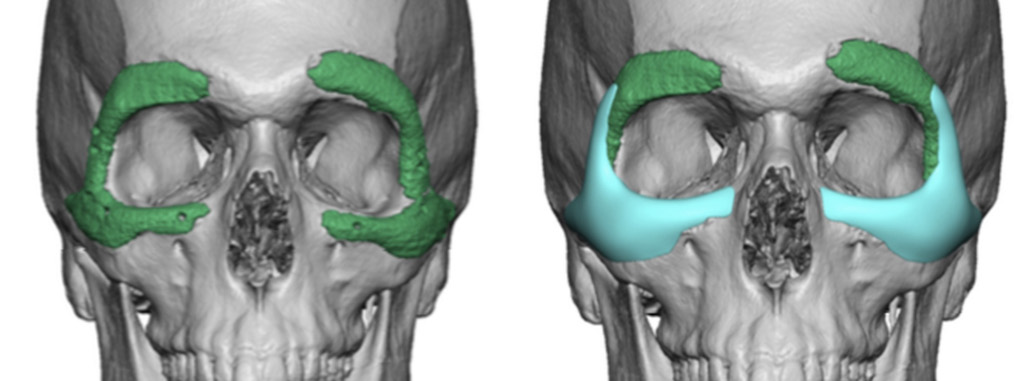
Secondary custom infralateral orbital rim implants after a prior successful infraorbital-malar and lateral brow/rim implant surgery. His goal was to further enhance an already good resulting the infraorbital and lateral orbital rim area. This required removing the existing smaller infraorbital-malar implant.
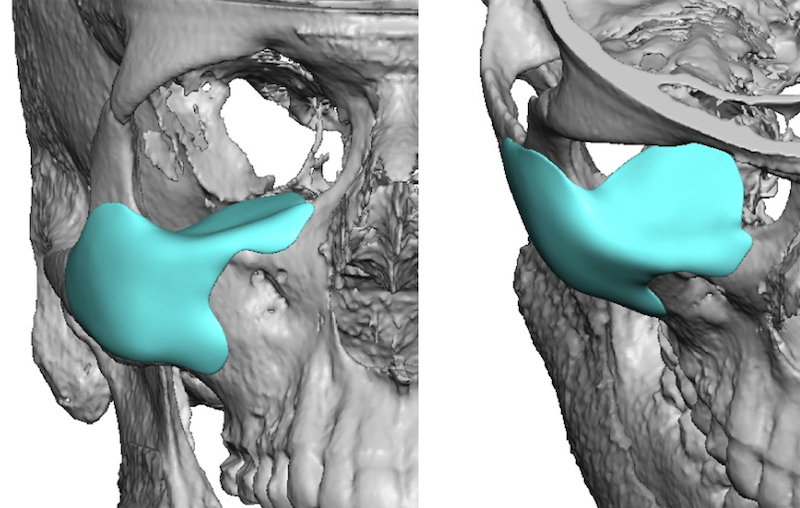
Custom right orbital floor-rim-malar implant for correction of vertical orbital dystopia where the mirroring technique is used to create wha is missing based in the opposite normal left side.
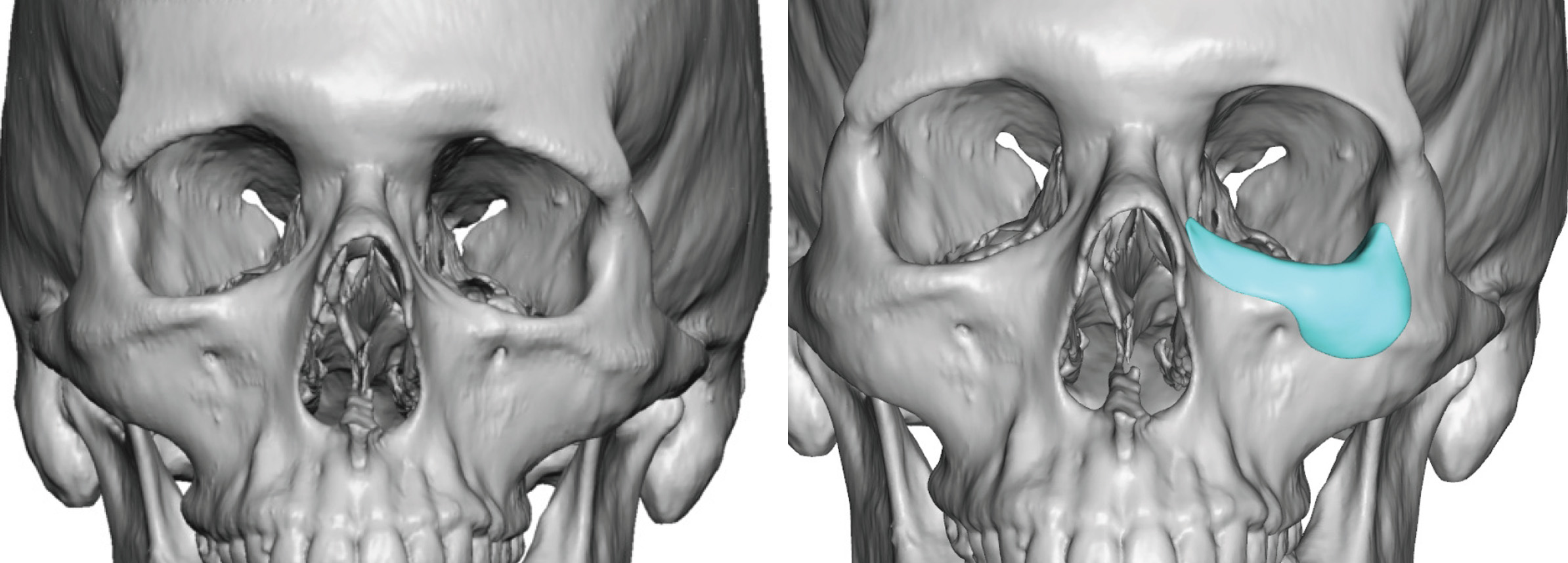
Vertical orbital dystopia affects the entire orbital box in which its treatment is a foundational custom implant of the orbital floor and infraorbital rim that is designed to match the bony anatomy of the opposite normal orbital box. But it also requires other ‘box’ adjustments of the lower brow bone through vertical shortening of the lower tail of the brow bone down to the frontozygomatic suture line.
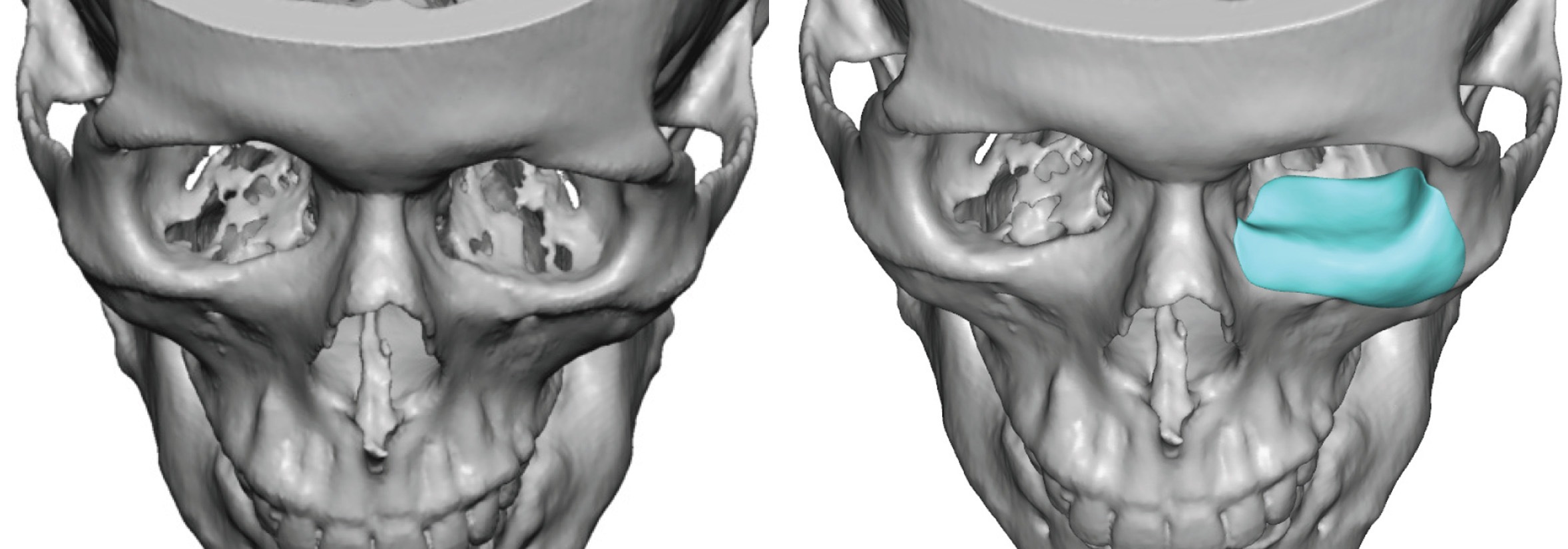
In custom orbital implants for vertical orbital dystopia the effect of raising up the eyeball comes from the augmentation of the lower anterior third of the orbital floor.
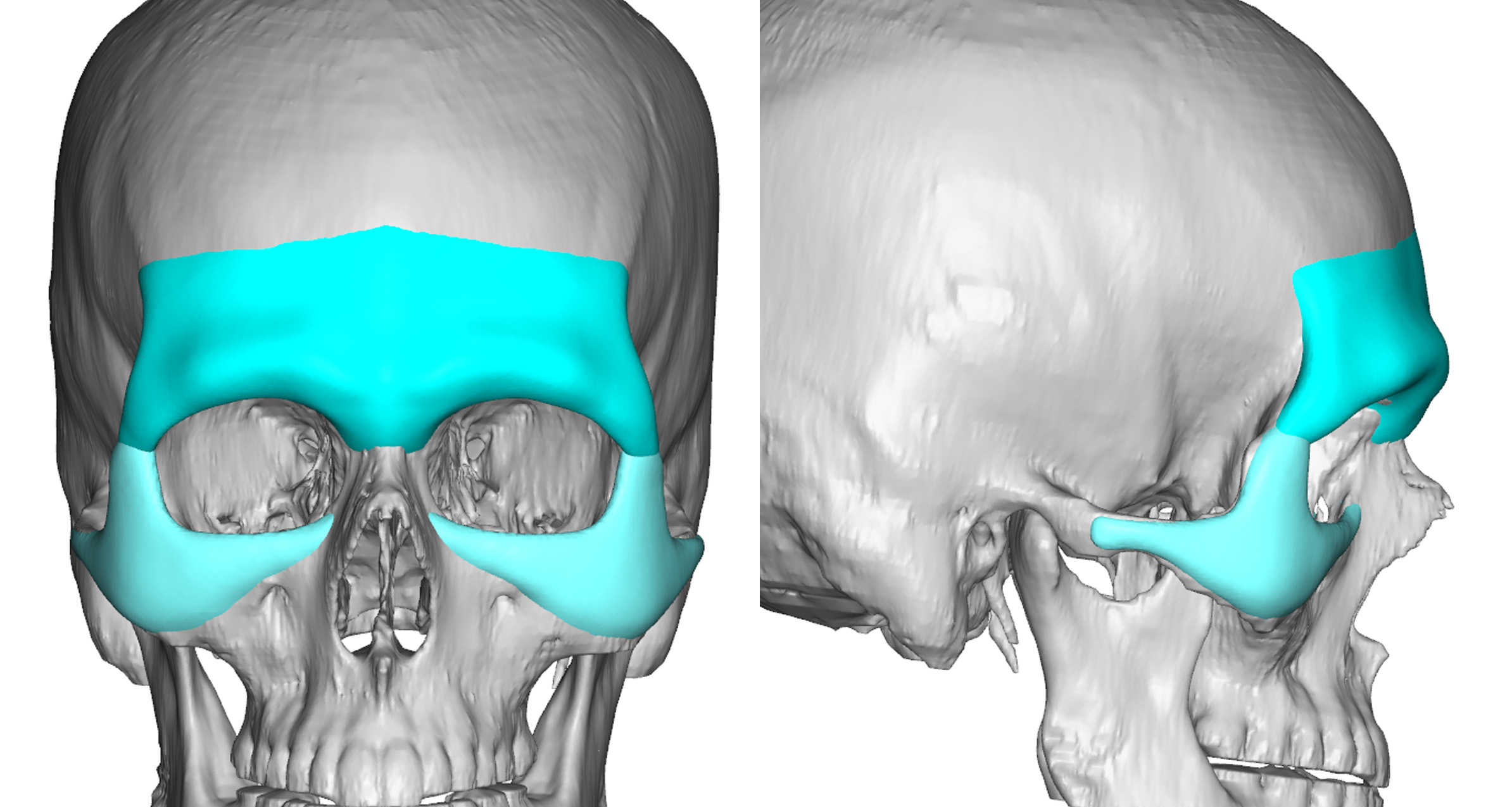
Creating an overall periorbital augmentation effect (nearly 360 degree orbital rim augmentation) can be accomplished by a two piece design. The brow bone implant is inserted endoscopically from above and stops at the frontozygomatic suture. From there the infraorbital-malar implant meets it being placed through a lower eyelid incision.
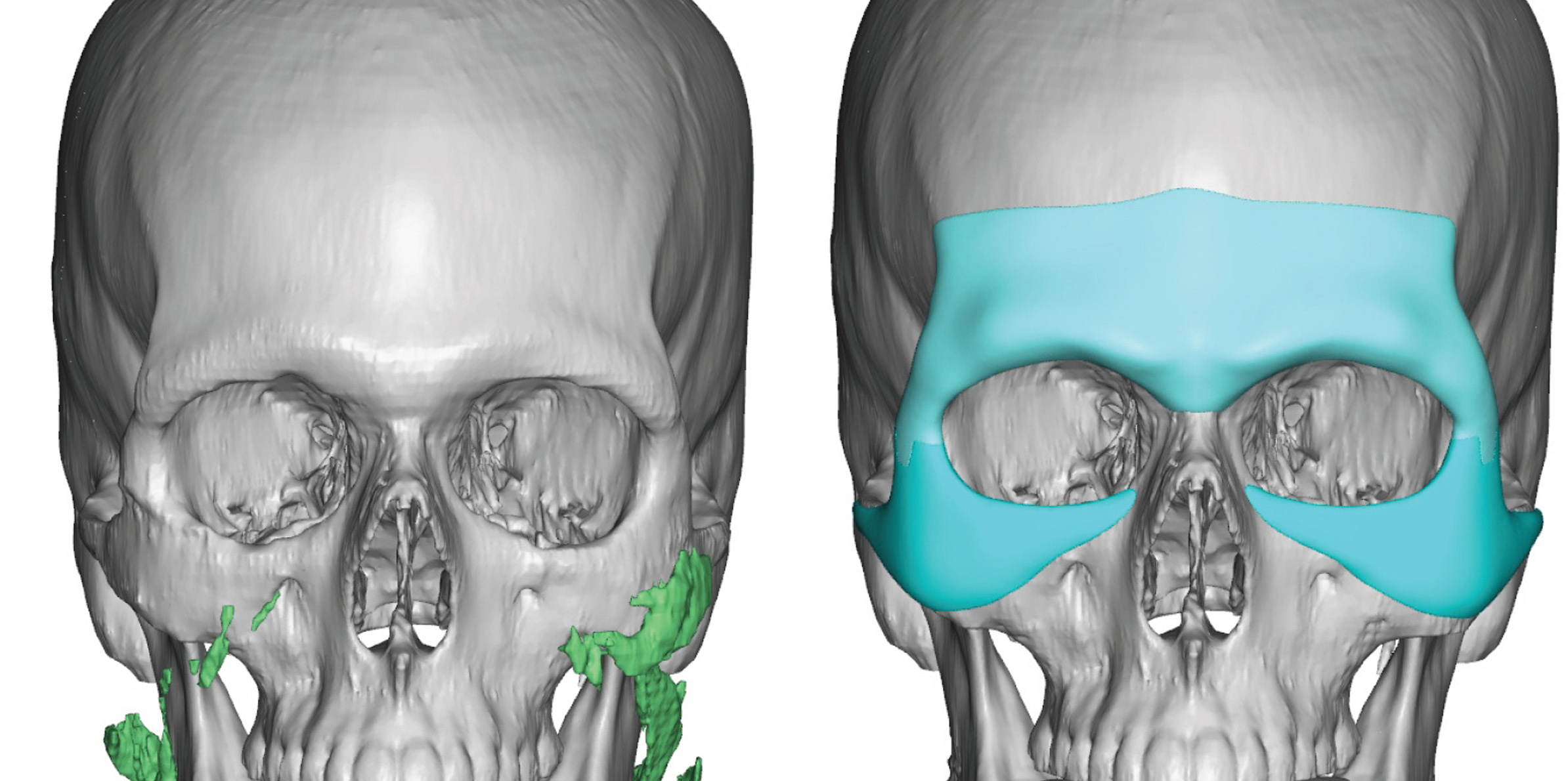
For the male seeking a less wide open eye appearance or even the ‘hunter eye’ look, custom periorbital implants (two piece brow bone and infra lateral orbital-malar implants) provide the skeletal base for that type of external facial change.
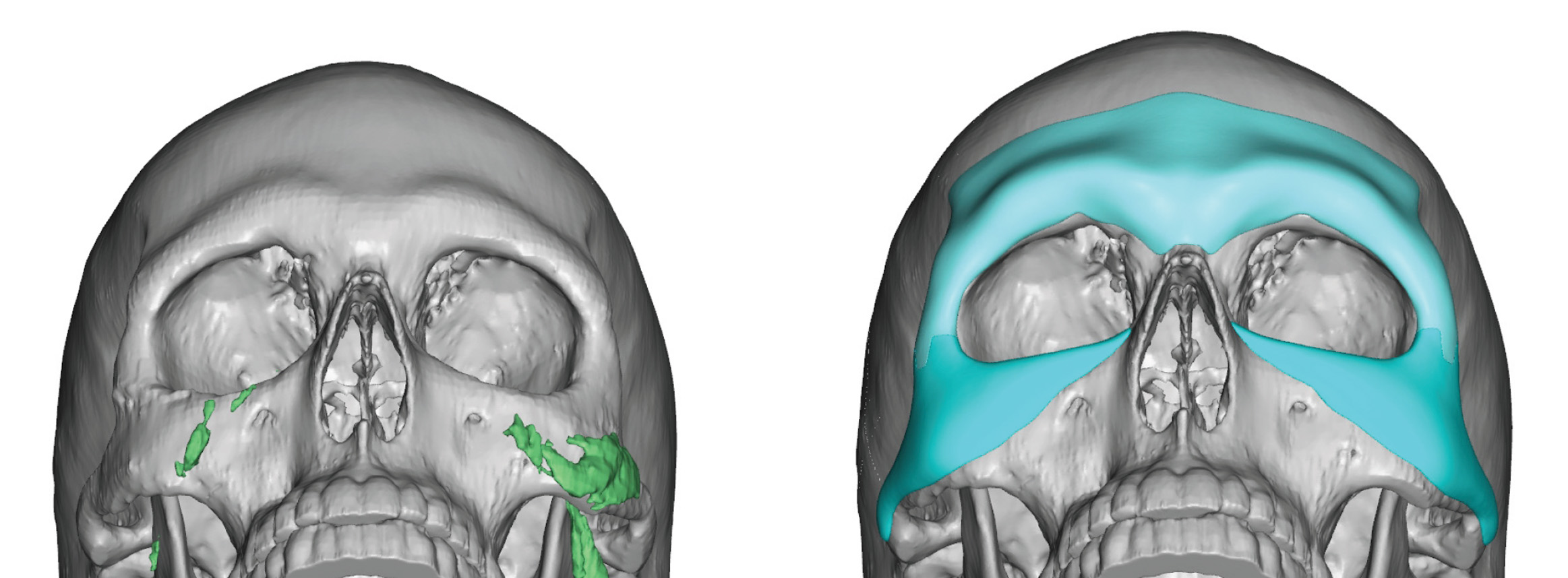
A few millimeters of bone augmentation that covers the entire periorbital region and blends into the forehead, cheeks and maxilla creates the effect of a naturally developed smooth periorbital augmentation effect.
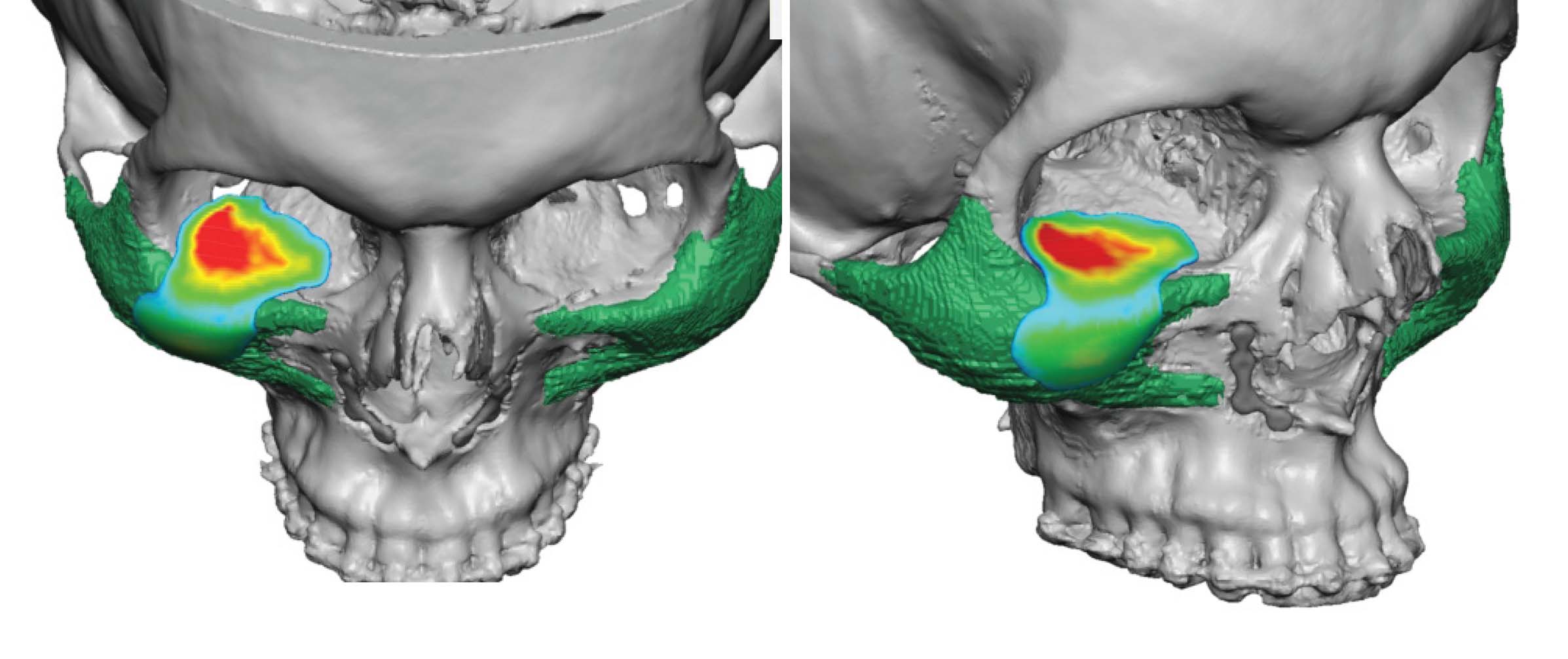
Vertical orbital dystopia (VOD) is very often associated with an ipsilateral facial asymmetry. A custom orbital floor-rim implant is one component of VOD surgery that helps raise up the lower eye. In this case he had prior custom infraorbital-malar implants which were initially placed without efforts at VOD correction. He secondarily desired to have the VOD treated and a custom VOD implant was designed to fit over his existing custom infraorbital-malar implants.

To reverse the effects of facial feminization surgery (lateral or tail of the brow bone reduction) and the undereye and cheek deficiencies caused by double jaw surgery (bimaxillary advancements) custom brow bone and infraorbital implants were designed. They joined together at the lateral orbital rim to create a near circumferential periorbital augmentation effect.
Custom Nasal Implants
Designing implants for the small area of the nose is the least commonly performed custom facial implant. When it is done it is usually done as part of an extension from a brow bone or forehead-brow bone implant. While designed as an extension from the brow bone above, it is manufactured and placed as a separate implant.
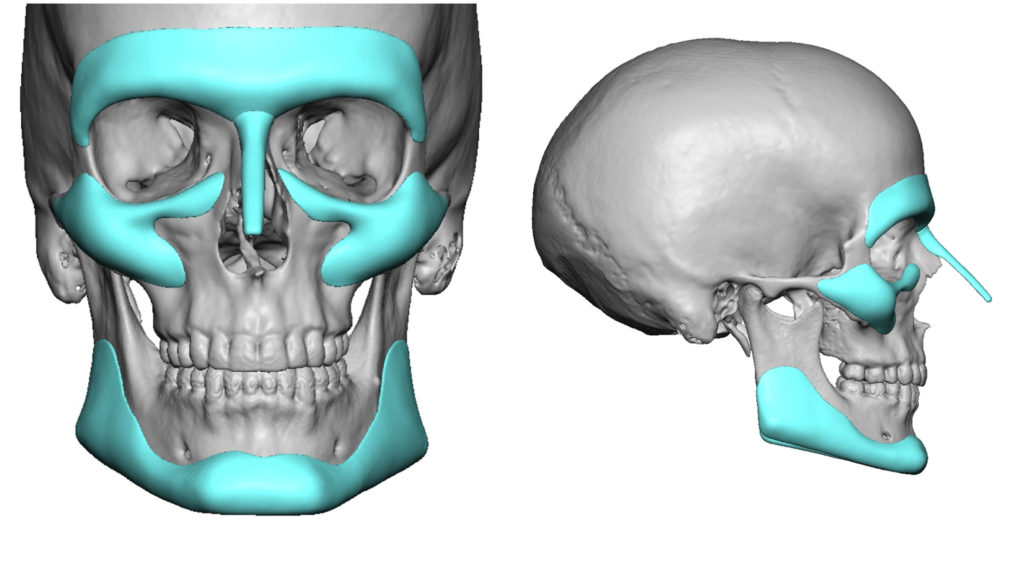
A custom nasal implant as part of a comprehensive three level facial augmentation for a total facial masculinization effort.Custom nasal implant as part of numerous custom facial implants. Such implants are often designed as part of/an extension of a brow bone implant.
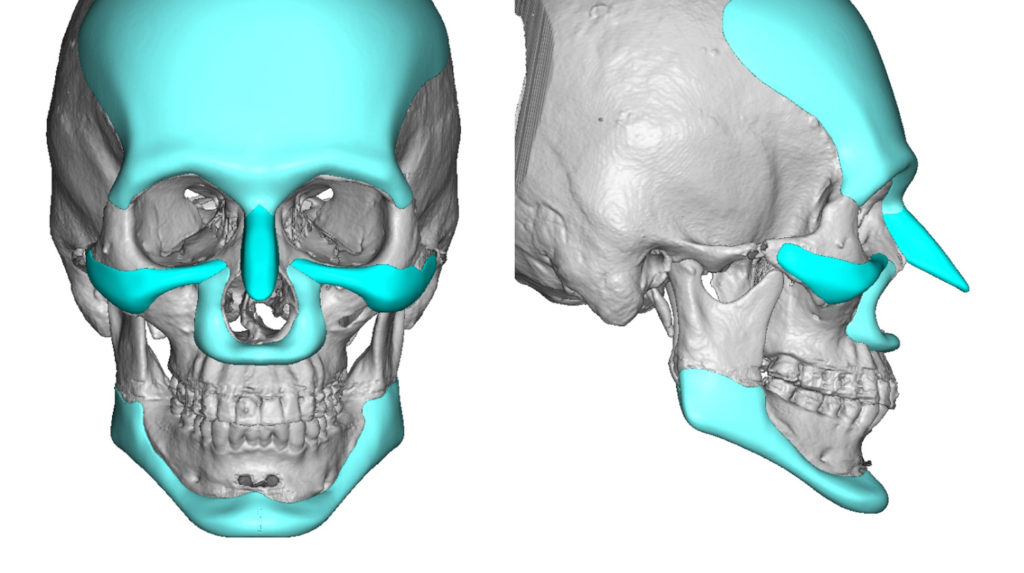
Custom nasal implants as part of custom forehead-brow bone, midfacial and jawline implants.
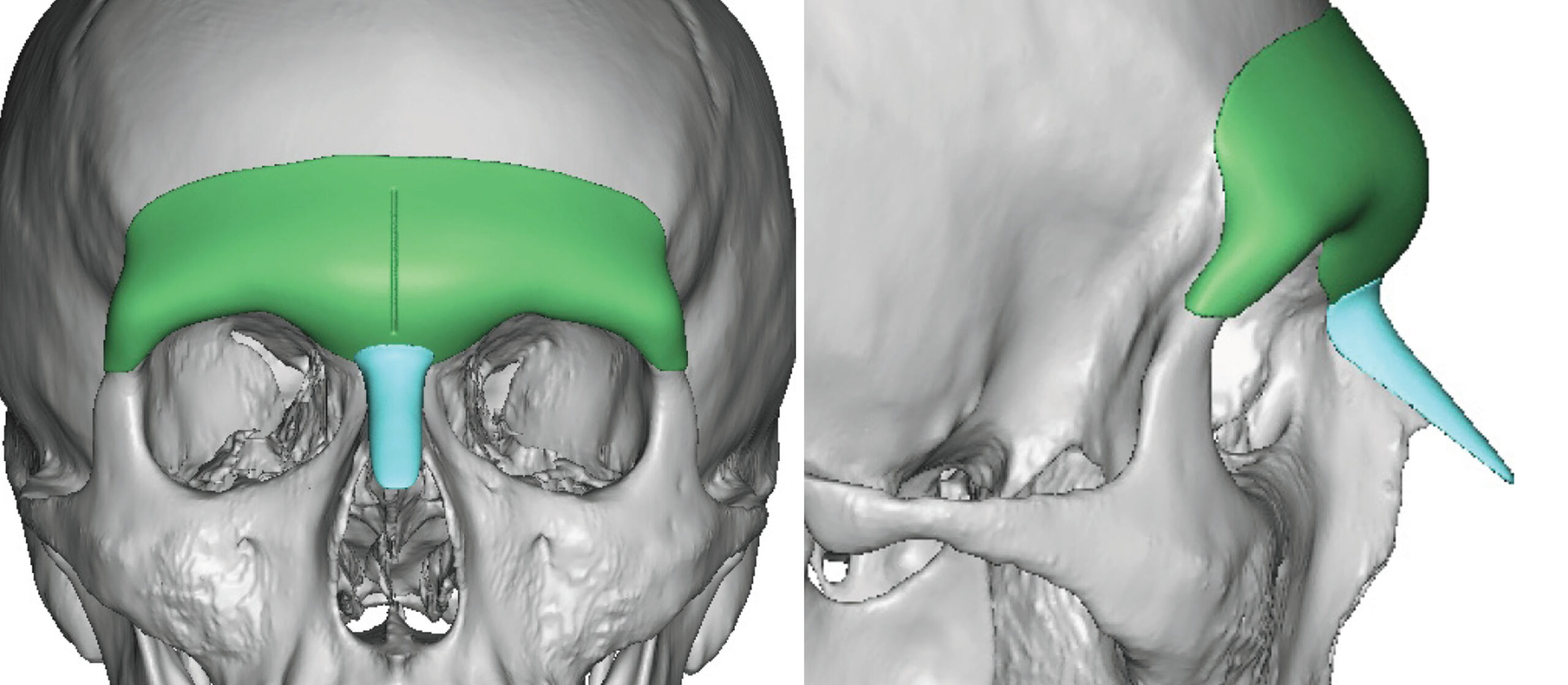
The use of designing a custom nasal implant is very uncommon and when needed its use would be for a unique purpose. In this patient with an existing custom brow bone implant the need to build up the radix of the upper nose and abut directly up against the brow bone implant would be one unique need for a custom nasal implant design.